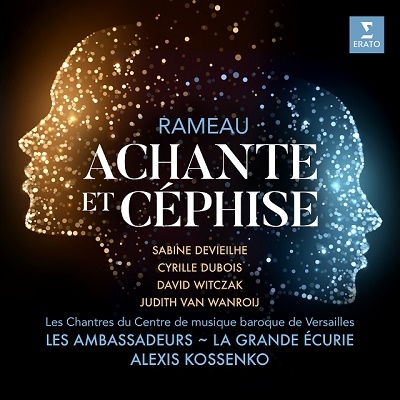
約270年の沈黙を破り、ラモーの歌劇『アカントとセフィーズ』全曲の世界初録音!
ルイ16世の兄であるブルゴーニュ公の誕生を祝うためにラモーに委託し、百科全書派で劇作家のジャン=フランソワ・ド・マルモンテルによる台本で作曲された歌劇「アカントとセフィーズ」は、ラモーの歌劇の中でも最高の英雄劇とされている作品です。神話とおとぎ話を1つの主題に組み合わせ、邪悪な魔神オロエスの魔法の力と、ヴィーナスと愛への伝統的な賛辞が組み合わされています。1751年11月19日にパリで初演され14回公演がおこなわれましたが、その後の再演はありませんでした。
豪華なオープニング(公爵の誕生を祝う花火を模倣した序曲)から邪悪な天才オロエスの恐ろしい場面から、後半の牧歌的へと展開していく様、当時のフランスでは珍しいシャルモー(クラリネットの前身)や荒々しい狩猟ホルンの使用など、ラモーの劇的で色彩豊かな天才であるところが最も示された作品です。
1977年生まれのアレクシス・コセンコは、様々なピリオド楽器オーケストラでのトラヴェルソ奏者を務め、2010年にレザンバサドゥールを結成。多くの歌劇の再演なども行っています。このオペラの主役セフィーズにはサビーヌ・ドゥヴィエルが起用され、「言葉の重さを重要視し、洗練された敏感な歌には、偉大な哀愁の風が吹いている」「柔軟かつ機動的で自然な魅力にあふれている」と絶賛されているように、最も得意とするフランス・バロック・オペラを見事な表現で歌っています。アカント役には、最近フランス・オペラを中心に主役を歌っている評価の高いシリル・デュボワ。表情豊かなダヴィット・ヴィチャック、古楽系やフランスのレパートリーを中心に引っ張りだこのワンロイのほか、旬の歌手たちがこれまでの知られざるラモーのオペラ作品の魅力を浮き彫りにしています。
ワーナーミュージック・ジャパン
発売・販売元 提供資料(2021/08/27)
Many more Rameau operas are available on recordings than there were a generation ago, but new ones are surfacing all the time. A splendid example is Achante et Cephise, composed in 1751 to mark the birth of Louis XVs grandson. The work received its modern debut only in 2012, and this recording by the newly allied historical performance group Les Ambassadeurs - La Grand Ecurie, and director Alexis Kossenko is the world premiere. The commercial success of the album may seem unexpected for an unknown Rameau opera, in a seemingly oxymoronic genre ("pastorale-heroique"), with a preposterous story involving two lovers under the competing spells of an evil genie and a good fairy, but the music shows Rameau absolutely at the top of his powers, bringing a vast range of musical genres into the tale. There is a profusion of sparkling dances, overtures and interludes that may be fugal or otherwise show sophistication, arioso recitatives that move the action along urgently, arias that could easily stand alone in recital, and extremely catchy choruses. The singers, led by Cyrille Dubois and soprano Sabine Devieilhe in the title roles, are sprightly and energetic, but the real credit here goes to Kossenko, who conveys the majestic scope of Rameaus musical thinking in a way that has very rarely been done. Rameau enlarged the sound world of opera in this work; it was the first to contain clarinets. They are right up front in the overture, and Kossenko puts them in the foreground. Throughout, he gives a sense for the way Rameau ruled French music for so long. One can easily imagine audiences humming these tunes in the street after seeing the opera. On the market during the holiday season of 2021 and beyond, this would be a gift sure to be appreciated by anyone with the slightest liking for Rameau.
Rovi