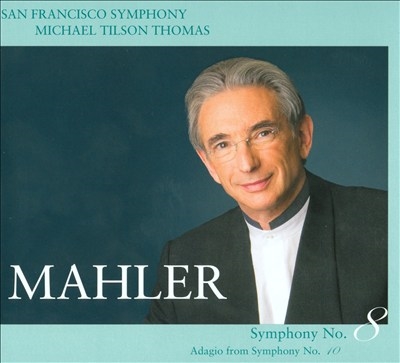
MTT&SFSのマーラー・サイクル最終章! フィナーレを飾るのは“千人の交響曲”!
2001年9月、アメリカ同時多発テロの直後に収録された慟哭の「交響曲第6番《悲劇的》」で幕を開けたマイケル・ティルソン・トーマス&サンフランシスコ交響楽団の“マーラー・サイクル”。スタートから11作目、遂に迎えた最終章は、交響曲全曲録音の最後を飾るに相応しい大作であり、リリースが待ち望まれていた「交響曲第8番《千人の交響曲》」!
MTT&SFSのマーラー・サイクルは、「交響曲第6番《悲劇的》」(821936-0001-1)、「交響曲第3番」(821936-0003-2)、「交響曲第7番《夜の歌》」(821936-0009-2)の3作品がグラミー賞を受賞。グラモフォン賞、ビルボード・クラシカル・チャートのトップ10へのランクインといった世界各国での音楽賞の獲得や、シリーズ全体で100,000枚以上という驚異的なセールスを記録するなど、スタートから現在まで世界中で絶賛を浴び続けている。今回の「交響曲第8番」では、ソリストにソプラノのエリン・ウォールやラウラ・クレイコム、メゾのカタリーナ・カルネウス、イヴォンヌ・ナエフなどMTTが信頼を置く世界一流の歌手陣が集結。弦楽セクションを両翼配置(対抗配置)とするなど、この壮大な交響曲の持ち味を圧倒的なスケールで解放するためにMTT&SFSが整えた万全の態勢が頼もしい。また、MTT&SFSのレコーディングを支え続けてきた録音チーム“トリトナス”が収録を担当しており、シリーズの持ち味でもある驚異的なハイファイ録音にも期待がかかる。MTT&SFSのマーラー・サイクル、圧巻のフィナーレへ――! [コメント提供;東京エムプラス]
---
発売・販売元 提供資料
In spite of its small flaws, this is undeniably a great performance of Mahler's Eighth. It has the right balance of line and harmony, the right feel for mass and momentum, the right sense of being in and of the moment, and above all, the sheer audacity to pull off the whole mighty and monumental work. Conductor Michael Tilson Thomas is not quite as precise as he should be at every point in the score. Some entrances are not exact, some sonorities are not properly balanced, and some tempo relationships are not as tight as they could be. But these are small flaws in comparison with the greatness of Tilson Thomas' conception and the magnificence of his execution. Similarly, the San Francisco Symphony is not quite as together as they could be in every bar of the piece. There are slips in ensemble, as well as the occasional flub that such virtuoso writing orchestral can cause in even the best bands. But again, the tremendous verve and enormous power the San Francisco musicians bring to the music more than make up for their few mistakes.
High praise goes to James Morris for his stentorian bass, and to Erin Wall for her clarion soprano, but another soloist's diction is on-again, off-again. The San Francisco Symphony Chorus deserves cheers for its strength and agility, as do the children's choruses for their purity of tone, but both groups have occasional intonation problems. The weaknesses, though, are insignificant in the face of the sweep and grandeur of the total performance, which grabs listeners from the first bar and doesn't let go until they are left, starry-eyed and laughing, at the last ringing chord of the final Chorus Mysticus.
This great Eighth is paired on the recording with a reading of the opening movement of Mahler's Tenth that makes its composer sound like a self-pitying, self-absorbed weakling. That such a puny and pusillanimous account comes before the first movement of the Eighth in the program is deeply regrettable.
Played back on a standard stereo system, the performance sounds dim and distant unless turned up to the highest volume, and even then it's not significantly better. When it's played on a quadraphonic super-audio system, however, the performers seem to step into your living room, or, put another way, they're inviting you to step into their concert hall.
Rovi