| フォーマット | CDアルバム |
| 発売日 | 2002年12月10日 |
| 国内/輸入 | 輸入 |
| レーベル | Sony BMG |
| 構成数 | 1 |
| パッケージ仕様 | - |
| 規格品番 | 74321974192 |
| SKU | 743219741929 |
構成数 : 1枚
合計収録時間 : 00:46:21
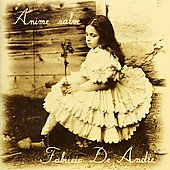
The last studio album Fabrizio De Andre recorded before his untimely death to cancer in 1999, Anime Salve functions both as a testament to the singer's entire career and a further indicator of the stylistic restlessness that characterized De Andre's work since 1984's Creuza de Ma. Like its predecessor, Le Nuvole, Anime Salve is a hybrid album, albeit a much more somber one since the satirical intent of Le Nuvole is notoriously absent here. Its mixed nature is, once again, probably due to the contrasting creative forces at work. Throughout his career, De Andre had an unerring eye for choosing his collaborators. In turn, talented musicians such as Gian Piero Reverberi, Nicola Piovani, Francesco De Gregori, PFM, Mauro Pagani, and Massimo Bubola all left an indelible stamp on the De Andre records on which they worked. For Anime Salve, De Andre continued his ongoing research into Mediterranean folk music since Creuza de Ma, this time with arranger Piero Milesi, who had also participated in Le Nuvole. In addition, De Andre asked his friend and distinguished colleague songwriter Ivano Fossati to co-write the entire album. The influence of Fossati is plain to see, and occasionally his voice can be heard even louder than De Andre's own in Anime Salve. Roughly half the album is made of the long, slow, atmospheric, keyboard-dominated compositions so typical of Fossati's work, reminiscent of Peter Gabriel's late albums such as Us or Up . The moving title track, sung together with Fossati, is a perfect example of this tendency. The other half, instead, consists of pieces based on Mediterranean or Balkan rhythms or dances, such as the rousing "Dolcenera," very much in tune with previous Pagani-De Andre projects.
However, a common thread runs through the album, and that is none other than De Andre himself. This can be heard chiefly in Anime Salve's main thematic preoccupation, the sympathetic portrayal of marginal people or individuals isolated from society: a transsexual, the Rom people, a Genovese fisherman, etc. To all those individuals or minorities discriminated or segregated on account of race, age, sex, profession, or religion (or lack of), to all those the modern world seems to offer no place, De Andre offers compassion and the wish that they could take advantage of their solitude to achieve a degree of personal freedom long unattainable in modern urban society. This sympathy for the oppressed paired with the anarchic longing of an existence free from the bounds of society indeed constitute the fundamental tenets of the entire De Andre oeuvre. Other recurrent elements of De Andre's style present in this album are the use of dialects and literary sources. Anime Salve includes a song in Genovese and choruses, titles, or phrases in Portuguese, Sardinian, and Romani, and its first and last tracks are based on novels by Fernanda Farias De Albuquerque-Maurizio Jannelli and Alvaro Mutis. Still, for all this accumulation of renowned collaborators and sources, Anime Salve's most beautiful moment is the sole track in the album that sounds like Fabrizio De Andre and no one else, the autobiographical childhood memory "Ho Visto Nina Volare." The simplest song in the album, with a hypnotic classical guitar riff backed by spare percussion and piano, it is also the most delicate, and it immediately brings to mind the classic De Andre of records such as Rimini or Indiano. A sad yet fond lament for all things past, it also reminds listeners what a loss to the world De Andre's death was, and how fortunate that, before leaving, he committed to record scores of extraordinary songs like this one. An appropriately elegiac album, Anime Salve is a fitting conclusion to the most exceptional discography by any Italian artist of the postwar era. ~ Mariano Prunes
エディション : Remaster
録音 : ステレオ (---)
読み込み中にエラーが発生しました。
画面をリロードして、再読み込みしてください。