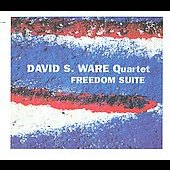
| フォーマット | CDアルバム |
| 発売日 | 2002年10月28日 |
| 国内/輸入 | 輸入 |
| レーベル | AUM Fidelity |
| 構成数 | 1 |
| パッケージ仕様 | スリムライン |
| 規格品番 | 23 |
| SKU | 642623302323 |
構成数 : 1枚
合計収録時間 : 00:39:25
Personnel: David S. Ware (tenor saxophone); Matthew Shipp (piano); William Parker (bass); Guillermo E. Brown (drums).
Recorded at Systems Two Studios, Brooklyn, New York on July 13, 2002.
Composer: Sonny Rollins.
David S. Ware: David S. Ware (tenor); William Parker (bass instrument); Guillermo E. Brown, Matthew Shipp.
Personnel: David S. Ware (tenor saxophone); Matthew Shipp (piano); William Parker (upright bass); Guillermo E. Brown (drums, drum).
Recording information: Systems Two Studio, Brooklyn, NY (07/14/2002).
Arranger: David S. Ware.
After a decade and a half of dwelling in the shadows of the vanguard jazz pantheon, saxophonist David S. Ware reaches his zenith with this rendering of Sonny Rollins' 1958 magnum opus Freedom Suite. Originally composed for performance by a trio, Ware's addition of Matthew Shipp's piano to the proceedings allows him to completely reconceptualize the entire work. Where Rollins' original bordered on atonality with restrained tension held by the rhythm section, Ware allows the dissonance free reign, or nearly so. This does not mean he doesn't follow Rollins' dictations for flow or progression, quite the opposite; it's more that Ware allows the dynamic and rhythmic invention a freer passage. Shipp is the bridge, so to speak, for both harmonic and rhythmic ideas. As Ware states the theme with the trio, Shipp enters at a crucial melodic juncture to open the free exchange between front line and the other players. Guillermo E. Brown's sense of time here is fluid, yet his attention to nuances opened by Shipp is taut, full of tight rim shots and crisp accents. William Parker's propulsive bassman's nature is particularly suited to this work. As the theme is restated over and again, it is Parker who gives it wings from the inside of the intervallic corridor. He moves once, a shade off the beat, then a fragment away from the harmonic base, leaving the diatonic chords to rest with Shipp; he then moves toward a spatial place on the far reaches of the variation, which is where Ware seeks and finds him. Shipp, for his part, creates large foundation constructs from which all the players draw. He functions here not so much as a soloist, but as the most integral utility player in that he is everywhere. When the music creates fissures of dynamic or melodic tension, his job is either to resolve them or to make the gaps wider in order to let more informational and emotional elements in. Ware benefits from this profoundly in the sense that his own innate lyrical nature is allowed to careen from one side of the composition's multi-faceted harmonic approach to the other, allowing for a variant invention in all segments of the work. This is a passionate piece that's passionately played; its layers of meaning are particularly evocative at the turn of the 21st century, where the very meaning of freedom is hotly debated in all cultures. This is the most masterful of interpretations. ~ Thom Jurek
録音 : ステレオ (Studio)
読み込み中にエラーが発生しました。
画面をリロードして、再読み込みしてください。