Jazz
CDアルバム

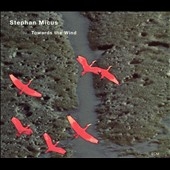
Towards The Wind

0.0

販売価格

¥
3,490
税込
還元ポイント

販売中

在庫わずか
発送目安
当日~翌日

在庫状況 について

・各種前払い決済は、お支払い確認後の発送となります(Q&A)

フォーマット CDアルバム
発売日 2002年07月23日
国内/輸入 輸入
レーベルECM
構成数 1
パッケージ仕様 -
規格品番 21594532
SKU 601215945324

構成数 : 1枚
合計収録時間 : 00:51:56
録音 : ステレオ (Studio)

  1. 1.[CDアルバム]
    1. 1.
      Before Sunrise, Pt. 1

      アーティスト: Stephan Micus

    2. 2.
      Morning Breeze, Pt. 2

      アーティスト: Stephan Micus

    3. 3.
      Flying Horses, Pt. 3

      アーティスト: Stephan Micus

    4. 4.
      Padre, Pt. 4

      アーティスト: Stephan Micus

    5. 5.
      Birds of Dawn, Pt. 5

      アーティスト: Stephan Micus

    6. 6.
      Virgen de la Nieve, Pt. 6

      アーティスト: Stephan Micus

    7. 7.
      Eastern Princess, Pt. 7

      アーティスト: Stephan Micus

    8. 8.
      Crossing Dark Rivers, Pt. 8

      アーティスト: Stephan Micus

作品の情報

メイン
アーティスト: Stephan Micus

商品の紹介

Being a perpetual student, Stephan Micus usually makes world music by default. He breathes patience and skill into the exotic instruments he uncovers, but certainly with respectful bending of the rules along the way. Towards the Wind follows in the same exploratory tradition -- educated, but unassuming as to the nature of what an instrument is "supposed to do." Here, the album evokes an easily digestible cross section of Middle Eastern mysticism -- swirling sand dunes, rust-colored sunsets, and sacred spaces. The opening passage, "Before Sunrise," shines the spotlight on the bass duduk, an Armenian reed instrument that's typically left to accompany another soloing duduk. Left to his own devices, however, Micus coaxes some pleasant baritones out of the woodwind. Later, he unveils a 14-string guitar of his own design, which he strums in a mildly Spanish direction ("Virgen de la Nieve"). Rounding out the ensemble is a kalimba, a Chinese sattar, and a talking drum from Ghana. Rarely without his shakuhachi, the German-born composer also has his favorite Japanese flute handy for three of the eight selections on this CD. The aforementioned instruments all get a little solo time (or even an entire song), creating a global melting pot that listeners have come to expect from this composer. Only once do those expectations struggle to stay met, and it comes by way of "Eastern Princess," which almost flirts with folk-pop Americana of the 1970s -- a steel-string guitar strums quite unmysteriously through the Rocky Mountains, although accompanied by a very curious language he sings, threaded together by syllabication rather than any known meaning (check the final piece to his Music of Stones from 1989). As for the featured double-reed centerpiece, it was after hearing some recordings of Jivan Gasparian (a virtuoso on the duduk) that Micus sought him out in Armenia to be his teacher. Gasparian obliged, and it is through his influence that much of the soloing on Towards the Wind stays airborne. Indeed, Micus describes this instrument as the shakuhachi's "twin" in terms of its breathy qualities and expressiveness. Although he constantly acquires new sounds, his confidence as a musician stays intact. What results is an album of modest beauty -- noteworthy because of the instruments and the performer more than the compositions themselves. ~ Glenn Swan
Rovi

メンバーズレビュー

レビューを書いてみませんか?

読み込み中にエラーが発生しました。

画面をリロードして、再読み込みしてください。