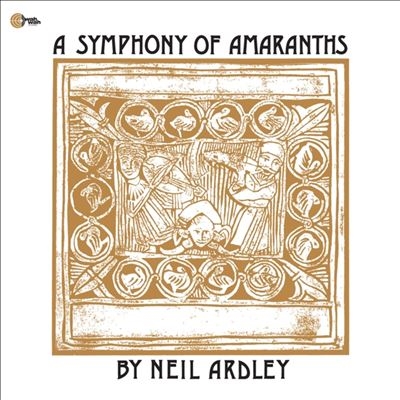
By the time Neil Ardley issued 1972s A Symphony of Amaranths, hed played piano and composed for the John Williams Big Band and directed the New Jazz Orchestra on their classic 1969 set Le Dejeuner Sur LHerbe. That year he directed and arranged strings on Colosseums Valentyne Suite and recorded his debut album, Greek Variations & Other Aegean Exercises (co-credited to Don Rendell and Ian Carr), as the first part in a trilogy. 1972s A Symphony of Amaranths was the second part, and the third was 1976s jazz-rock Kaleidoscope of Rainbows. Released by Regal Zonophone, the set boasted mature compositions performed by classical, jazz, R&B, and pop musicians. Ardleys orchestra included reeds, winds, brass, chamber strings, glockenspiel, harp, and more.
The set includes two suites in the title piece, and Three Poems (that feature vocalist Norma Winstone). Between them is "The Dong with the Luminous Nose." The 25-minute title suite, dedicated to Gil Evans and Duke Ellington, adorns classical charts with jazz colors and textures; elements of Evans third stream fuse classical, jazz, and cinematic composition; from Ellington, expansive rhythmic signatures, sophisticated harmonies, and bright dynamics gather under Ardleys accessible yet idiosyncratic vision.
The first movement, "Carillon," offers a dialogue between classical expressionism, New Orleans jazz, swing, progressive jazz, and hard bop. "Nocturne" is positively Debussyian. Led by strings, oboe, and bassoon, the harp, bass, and horns all join in before Harry Becketts trumpet solo illuminates the harmony. Barbara Thompsons tenor sax solo rips the lid off as the tune moves out. "Nocturne" and "Impromptu" join progressive jazz to third stream fusion as strings, horns, and percussion ratchet across progressive big band and modal jazz before harp and strings carry it out elegantly. Ivor Cutler, a poet, singer, songwriter, and humorist from Scotland, drolly presides (in absentia) over the rhyming lyrics in "The Dong with a Luminous Nose," a musical narrative joining poetry to modernist jazz inside a poem by Edward Lear. Its first two-thirds are mysterious; they create noir-ish tension between film music and radio theater. Harp, strings, bass, and brushed drums carry it, then cut loose with Afro-Cuban rhythms and son pulses from the electric piano. The 12-plus-minute Three Poems features Norma Winstone singing poems by W.B Yeats, James Joyce, and Lewis Carroll with Ardleys charts. In Yeats "After Long Silence," an impressionistic strings-and-winds intro teases but quickly reveals Jon Hisemans drum kit guiding the group as they move toward vanguard jazz but dont break the swinging groove. On Joyces "She Weeps for Rahoon," the iconic singer is at once sensitive and commanding, offering the words as living entities rife with rebirth. Ardleys orchestra swings across modal and brightly arranged hard bop behind her voice. A Symphony of Amaranths may be part of a trilogy, but it stands heads and shoulders above its companions. Its gloriously assembled, dazzling tunes successfully combine fantastically varied, not always consonant styles, textures, and dramas to create a historic, visionary work in the annals of British jazz. ~ Thom Jurek
Rovi