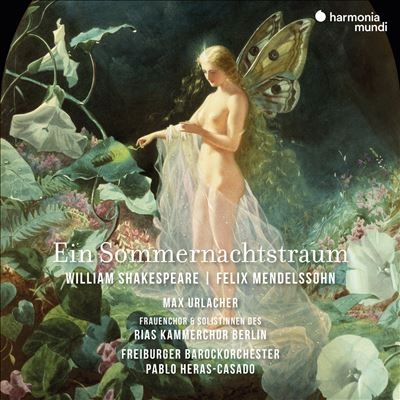
この上なく繊細にして軽やか、陽性の《真夏の夜の夢》!
エラス=カサド、FBOの真骨頂!
パブロ・エラス=カサドとフライブルク・バロック・オーケストラが、真夏の夜の夢全曲を録音しました!メロドラマつきで、テキストの朗読を務めるのはドイツの中堅俳優、マックス・ウルラッハー。朗読のほか、ヤーコプスの魔弾の射手などでも活躍、音楽作品への出演も多い実力派です。素晴らしく陽気なナレーターとして、音楽の世界を盛り上げます。彼のセリフと、演奏者陣が抜群のアンサンブルを展開しています。セリフからのRIAS合唱団メンバーの声の入りなど、まるでほかにも俳優がいるのかと思ってしまうくらいに自然です。エラス=カサドの、繊細な細密画のような音楽から、大胆なリズムの場面で発揮されるエネルギーなど、表情の幅も実に豊かです。歴史に裏打ちされた彼らの演奏は、この夢と魅惑の世界への楽しい旅を約束してくれます。
ウィリアム・シェイクスピアの喜劇『真夏の夜の夢』は、1595年頃に書かれ、その5年後に初めて印刷された、言わずと知れた世界文学の古典です。パーセルの『妖精の女王』(1692年)、ウェーバーの『オベロン』(1826年)、ブリテンの『真夏の夜の夢』(1960年)といった著名な舞台化作品がありますが、これらの様々なインスピレーションを受けた作曲家の中で、特別な位置を占めるに値するのがメンデルスゾーンでしょう。音楽一家に生まれた天才児は、幼い頃にシェイクスピアの呪術的な戯曲の「囁くような詩」に出会い、その詩を初めて耳にしします。一家の親戚であり、重要な文学史家、古典文献学者、ストラットフォード・アポン・エイボンの吟遊詩人作品の権威ある翻訳者であるシュレーゲルが、この若者に近世イギリス劇の世界を紹介しました。時代を超越したテーマと一見政治的でない筋書きを持つ『真夏の夜の夢』は、特に若い作曲家にとって特別な魅力を持っていたに違いありません。同時に、1826年のウェーバーの最後のオペラ『オベロン』にも接したメンデルスゾーンは、演奏会用序曲として序曲を完成させます。この序曲だけでも、妖精たちの織り成す物語、妖精たちのからかい、そして最後はすべてうまくいき、主人公たちが楽しく幸せに去り、朝が来て妖精たちも姿を消す、という物語が詰まっていますが、その後1842年に全体を完成させたほしいという依頼を受け、1843年に完成します。舞台のアクションを追ったり、それを説明したり、雰囲気を豊かにしたりしながらも、常に音楽的な独立性を保った性格的な小品を、若き日と同じ天才的な筆致で次々と書きあげます。初演は1843年10月14日、王室のみに披露され、メンデルスゾーンの指揮の下、めくるめく大成功を収めました。その後ベルリンで初演され、ドイツ語圏の多くの都市をめぐることとなります。公演に接したリストは「虹色のオーラ」と「真珠貝のような輝き」を称賛しました。
HARMONIA MUNDI
発売・販売元 提供資料(2025/05/01)
Ein Sommernachtstraum is Shakespeares A Midsummer Nights Dream, translated and adapted by a group of German authors. Mendelssohn wrote an overture for the work in 1826 that became one of his most famous pieces; he later added a full complement of incidental music for it, which turned out to contain another all-time Mendelssohn hit, the "Wedding March." His music also contained small passages for the melodramas, short spoken texts with narration and other plot-joining devices. Mendelssohns music has been recorded before on historical instruments, and it responds well to their agility and lightness. The score has previously been recorded complete with the melodrama texts, which testify to the unity of Mendelssohns music, evident even in the way the overture and the main body fit together, even though they were written 18 years apart. This version by the Freiburger Barockorchester and conductor Pablo Heras-Casado, however, is notable in that it combines historical performance with the complete score, and this really works. It may be the first recording to do both, and the "Wedding March" here would bring an extra spring to the processional of anyones ceremony, with Heras-Casados clean period winds completely avoiding the hoariness of this standard. Sample the evergreen overture for an idea of the freshness of the interpretation. The physical version containing the complete German text is to be recommended here; one can hear how Mendelssohns little bits of music in the melodrama sections fit with the larger whole. Far from a novelty, this is an insightful performance of one of classical musics great standards. ~ James Manheim
Rovi