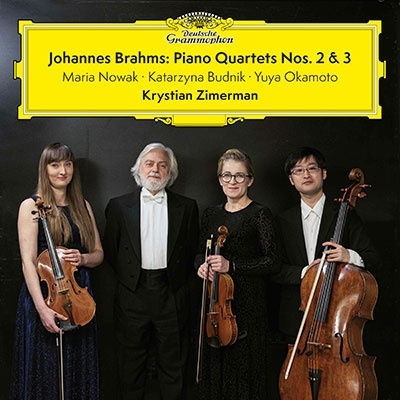
現代最高峰のピアニストが気鋭の弦楽奏者と奏でる室内楽への情熱
現代最高峰のピアニスト、クリスチャン・ツィメルマンによるブラームスのピアノ四重奏曲第2番と第3番のアルバムが登場。ツィメルマンはブラームスを絶賛し、「ソナタ、三重奏曲、クラリネット五重奏曲など、ブラームスの室内楽はすべてこの世のものとは思えないほど素晴らしい。それらの中に取るに足らない作品はありません」と語ります。ツィメルマンの室内楽への情熱は子供の頃にさかのぼり、それからずっと続いています。そして次のように述べています。「すべての偉大な作曲家が何らかのピアノを含む四重奏曲を作曲しています。それはしばしば見過ごされることがありますが、音楽史に素晴らしい豊かさをもたらしています」。ブラームスの3曲のピアノ四重奏曲の中で、最も有名なものは第1番ト短調ですが、ツィメルマンはむしろ時として見落とされることもある第2番と第3番に焦点を当て、それらにもその価値に見合う注目を向けてほしいと願っています。「私は特に第3番の四重奏曲が大好きです。素晴らしい曲で、とても力強い曲です。信じられないほどの勢いがあります」。この録音ではツィメルマンはチェリストの岡本侑也、ヴァイオリニストのマリシャ・ノヴァク、そしてヴィオリストのカタジナ・ブゥドニクと共に演奏しています。
※デジパック仕様
ユニバーサル・ミュージック/IMS
発売・販売元 提供資料(2025/01/10)
One can argue that longstanding chamber groups are capable of the deepest insights, and here, pianist Krystian Zimerman says that his association with the other three players is "coincidental." The two performances were recorded two years apart, not as part of the same recording session (although the venue, a Lugano auditorium, was the same), but the situation works here, for this is a piano-led interpretation of the Brahms Piano Quartet No. 2 in A major, Op. 26, and Piano Quartet No. 3 in C minor, Op. 60, presented in reverse order so as not to end on too grim a note. At one point, Brahms suggested that the printed version of the C minor quartet be adorned with an image of Goethes suicidal young Werther. Part of the appeal here is that the players capture the contrasting moods of the two works, the Schubertian warmth and melodicism of the earlier quartet, and the extreme introspective instability of the C minor work. Beyond mood, however, the two works are not so different; the Piano Quartet No. 3 was begun in the 1850s, although it was heavily revised later on. The most complex structural plans in Brahms are in his chamber music, and these are among the most intricate even by that standard. There is nothing wrong with, and much to like, in the work of the three string players here, but the performances are driven by Zimermans thinking and playing. Consider the opening of the Piano Quartet No. 3, which seems for all the world to be in a normal C minor until things start to go off the rails with a flat seventh. All these things have implications for what is to come, but perhaps the most destabilizing element is the leading tone announced in the piano as the Allegro material approaches. Zimerman puts the perfect weight on this, and one wont forget it as the movement proceeds. Zimerman controls the pace through the album as a whole, which, although it contains chamber music, is fully part of the pianists rising stardom and one of the more exciting Brahms chamber releases to come along lately. The second and third piano quartets are less familiar than the Piano Quartet No. 1 in G minor, Op. 25, but Zimerman told the players to change that situation, and it seems as though the group may have done so. The album made classical best-seller charts in the spring of 2025. ~ James Manheim
Rovi