Jazz
LPレコード

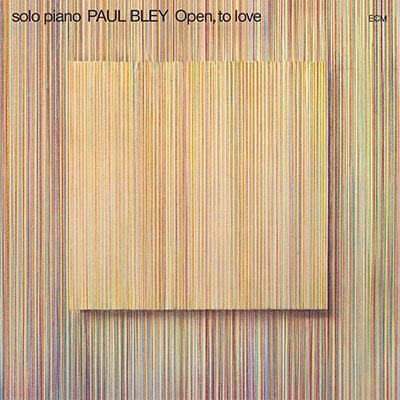
Open, To Love<限定盤>

0.0

販売価格

¥
6,090
税込
還元ポイント

販売中

お取り寄せ
発送目安
2日~7日

お取り寄せの商品となります

入荷の見込みがないことが確認された場合や、ご注文後40日前後を経過しても入荷がない場合は、取り寄せ手配を終了し、この商品をキャンセルとさせていただきます。

フォーマット LPレコード
発売日 2025年02月21日
国内/輸入 輸入
レーベルECM
構成数 1
パッケージ仕様 -
規格品番 4505319
SKU 602445053193

構成数 : 1枚

  1. 1.[LPレコード]
    1. 1.
      Closer
    2. 2.
      Ida Lupino
    3. 3.
      Started
    4. 4.
      Open To Love
    5. 5.
      Harlem
    6. 6.
      Seven
    7. 7.
      Nothing Ever Was Anyway

作品の情報

メイン
アーティスト: Paul Bley

商品の紹介

ジャズ史上最も影響力のあるピアニストの一人、ポール・ブレイの代表作でもある1972年発表のソロ・アルバム。

ブレイの作品は、ECMに在籍する多くのピアニストだけでなく、より広い世界の無数のミュージシャンに影響を与えている。
カーラ・ブレイとアネット・ピーコックの作曲を思慮深く探求している。

〈パーソネル〉 Paul Bley (p)
発売・販売元 提供資料(2025/01/20)

Despite the fact that pianist and composer Paul Bley had been a renowned and innovative jazzman for nearly 20 years, 1973 saw the release of his most mature and visionary work. This is one of the most influential solo piano recordings in jazz history, and certainly one that defined the sound of the German label ECM. Consisting of seven tracks, five of which were composed by Carla Bley (his ex-wife) and Annette Peacock (soon to be his ex-wife), and two originals, Bley showcased his newfound penchant for the spatial pointillism and use of silence that came to define his mature work. In Carla Bley's "Ida Lupino," the pianist took the song's harmonics and unwound them from their source, deepening the blues elements, brushing the Errol Garnerish ostinato with pastoral shades and textures of timbral elegance, and reaching the tonic chords in the middle register just as he forced the improvisation just barely into the abstract with his right hand, percussively slipping in one or two extra notes to highlight the deep lyricism in the tune's body. On his own "Started," Bley illustrates brazenly the deep influences of the Second Viennese School on his sense of harmony and counterpoint. Recalling Arnold Schoenberg's solo piano pieces in their engagement of dissonance and glissando placement, it's still Bley playing jazz and improvising, vamping on his own theme while turning melody and timbre back on themselves for the purpose of complete tonal engagement in the middle register. And in Annette Peacock's "Nothing Ever Was, Anyway," which closes the album, Bley makes full use of an element he employs throughout the recording: space and its ability to create the notion of consonance or dissonance from the simplest of melodies. Here notes appear, related, but just barely, to one another in a more or less linear sequence, and Bley stretches that connection to the breaking point by using his sense of spatial relationship in harmony to silence. He elongates the tonal sustain and allows it to bleed into his next line just enough, as if it were a ghostlike trace of another melody, a another distant lyric, attempting to impose itself on the present one, though it had just since ceased to exist. Ultimately, what Bley offers is jazz pianism as a new kind of aural poetics, one that treats the extension of the composer's line much as the poet treats the line as the extension of breath. Sheer brilliance. ~ Thom Jurek
Rovi

メンバーズレビュー

レビューを書いてみませんか?

読み込み中にエラーが発生しました。

画面をリロードして、再読み込みしてください。