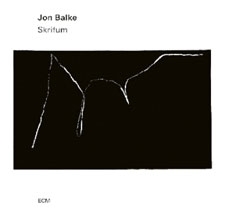
『Warp』(2016年)と『Discourses』(2020年)で始まった探究を続けているノルウェーのピアニスト、ヨン・バルケの4年ぶりの新ソロ・ピアノ作品。
本作では最初の一音から、新たな音の次元を提案し、『Skrifum』(アイスランド語で「書く」を意味する)は、さらに一歩進んでいる。彼が開発に携わった電子音響ツール「Spektrafon」の助けを借りて、バルケは演奏中にピアノから周囲の音声を直接操作することができるようになった。この活性化された残響は、即興対話の新しい素材となり、しばしば非常に美しい結果をもたらす。
「Spektrafonの音は、空間を要求するような形でフィードバックする。その機会を利用して、ほとんどモノフォニックに演奏し、ひとつひとつの音とサウンドスケープにおけるその位置に集中するようにしている」とバルケはコメントしている。
2023年11月にコペンハーゲンのヴィレッジ・レコーディングで録音され、ミュンヘンのバイエルン音楽スタジオで編集とマスタリングが行なわれた。アルバムのプロデュースはマンフレッド・アイヒャーとヨン・バルケが担当した。
<パーソネル>Jon Balke (p, spektrafon)
発売・販売元 提供資料(2025/01/21)
Skrifum marks Norwegian pianist and composer Jon Balkes third solo piano investigation in a decade. The companion titles, 2016s Warp and 2020s Discourses, both showcased compositions and improvisations threaded through with electronic sound processing and field recordings. Skrifum ("write" in Icelandic) changes that up. This time, Balkes "accompaniment" is drawn from a much more intimate source: the inside of the instrument itself. The pianist employs the aid of an electronic audio tool, the spektrafon. It is live processing software developed with technology professor Anders Tveit at the Norwegian Academy of Music. Using this interface, Balke is able to directly manipulate ambient audio sound from the piano (inside it, and immediately around it and its pedals) in real time: He is able to draw out sonic frequencies and sustain them in real time as harmonic chords, with sparkling overtones and even eerie drones. This active reverberation is then generated as new material for improvisation and musical dialogue.
These 14 selections are relatively brief; most are between two and five minutes with just one, closer "Tegaki," going over the latter mark. Balkes use of the spektrafon is revelatory on the opener "Sparks." As the pianist moves across, through, and inverts various scalar harmonics, sounds, manipulated with the echoes of drones, find themselves in inquisitive dialogue with the improvisor sending out edited inner echoes, washed-out pedal pulses, and reverberations; edgeless strings add dimension to the already probing melody. "Traces" commences as a near-classical inquiry before finding an off-ramp into speculative improvisation that moves directly into the detailed reverb control to offer conversational ballast. The spektrafon is more subtle in "Lanes," an elliptical improvisation that explores the intersections of modal scales -- it sounds like a work in the process of being composed. "Ductus" is sequenced between the nearly ambient "Stripes" and the droning, tension-filled "Rifts" that amplifies the harmonics from the pianos insides and challenges them with melodic drones and dissonant and modal phrasing. As such, it reflects an etude, but its subtly controlled dissonance, feedback, and delay create a nearly classical musicality in the jazz vocabulary. The title track is almost a miniature, but there is so much happening in its structure that the space required to trigger the harmonics is transformed into a whisper. Despite being the longest cut here, closer "Tegaki" is also the sparsest, and most melodic exercise here. Balke joins a folk melody and drone, then draws upon their shared tonality. It offers fragmentary melodic statements inside a floating harmonic architecture that relies heavily on the ringing overtones in the keyboards middle register. Throughout, Balkes play is offered almost monophonically, allowing him to focus, weigh, and balance each note as the spektrafon carves out space in response, illuminating, underscoring, and sometimes briefly concealing the contrasting harmonics. Skrifum is the crowning achievement in his trilogy thus far as it extends the pianos language inward. ~ Thom Jurek
Rovi
ヨン・バルケの音楽は、編成が変わっても変わらないと思う。一本の線のような旋律が澱むことなくテーマを描き、即興的なダンスのように動き、やがて消えていく。しかしこの描写には大抵の音楽はそうじゃないかという危うさがある。ただ、このバルケのピアノとエレクトロニクスの音楽は、この印象を確かに裏付ける。ピアノソロが即興なのか、作曲されたものを演奏したのものなのかはわからない。ピアノの旋律に干渉するかのように揺れるエレクトロニクスのサウンドの波も、その発生因がどこにあるのか明示されていない。タイトルは「書く」というアイスランド語で、音楽は「刻む」という印象だ。
intoxicate (C)高見一樹
タワーレコード(vol.175(2025年4月20日発行号)掲載)