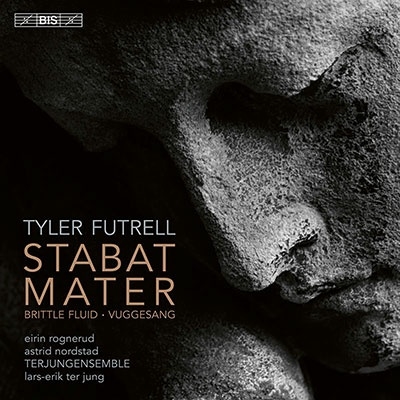
スターバト・マーテルを作曲家タイラー・フュートレルが現代的に解釈。
SACDハイブリッド盤。タイラー・フュートレルは、オスロを拠点に活動し、さまざまなスタイルと要素による作品を発表しているアメリカの北カリフォルニア出身の作曲家。ニューイングランド音楽院でリー・ハイラ、王立デンマーク音楽アカデミーでベント・サーアンセン、ウィーン国立音楽大学でミカエル・ジャレルに学び、オスロに移ってノルウェーの市民権を取得しました。ミュジーク・コンクレート、宗教音楽由来のミニマリズム、後期ロマンティシズム、スペクトル音楽、形式主義、現代の舞踊と劇場音楽と、多彩な影響とインスピレーションを受けて作曲。フュートレルの作品は、ノルウェー・ソリスト合唱団、トロンハイム・ソロイスツ、BIT20、テレマルク室内管弦楽団、アテラス・シンフォニエッタなど、各国のアンサンブルによって演奏されてきました。
フュートレルの《スターバト・マーテル》は、ペルゴレージやパレストリーナたちの作品と同じカトリック教会の聖歌「悲しみの聖母」のテクストによって作曲されました。〈悲しみの聖母は、涙にむせびながら〉から〈肉体が滅びる時には〉の章に、中世ポーランドの哀訴(planctus)「聖十字架の嘆き(Lament swietokrzyski)」による〈子守歌〉と、〈前奏曲〉と〈間奏曲〉を織りこみ、ソプラノとメゾ・ソプラノのソロ、弦楽とチェンバロによって演奏されます。ラーシュ=エーリク・テル・ユングと「テルユングアンサンブル」の委嘱を受けて作曲され、2022年、ウクライナにロシア軍が侵攻した少し後にオスロ国際教会音楽祭で初演されました。ブラームスの《子守歌》(Op.49 No.4)、グレツキの《第3交響曲》、サミュエル・バーバーの《弦楽のためのアダージョ》の「引喩」というページを含み、「なぜ、こんなに美しいのか」と「われわれはこの美を許容できるのか」という疑問を提起したという作品です。
チェロ二重奏による《子守歌》は、《スターバト・マーテル》に引用されたブラームスの《子守歌》による瞑想の小品。《Brittle Fluid(もろい液体)》は、《スターバト・マーテル》と主題的に関連のある作品です。テル・ユングがテレマルク室内管弦楽団の芸術監督だったころに委嘱され、ノルウェーの作家タリエイ・ヴェースオースの小説に因む「氷の城(Is-slotet/The Ice Palace)」の仮題から、「凍った滝」を示す曲名に変えられました。「14人の弦楽アンサンブル」のために作曲され、フュートレル自身がテルユングアンサンブルの編成に合わせてアレンジした「11人」の版がこのアルバムの演奏に使われました。
キングインターナショナル
発売・販売元 提供資料(2024/08/05)
Settings of the Stabat mater poem -- about the sorrowful mother who was standing beside the Cross weeping where her son was hanging -- date back as far as Josquin Desprez. Tyler Futrell is an American composer who lives in Norway and wins big industry prizes there, although hes not as much known elsewhere. It is his genius to have acknowledged the long thread the text has woven though music history, even as he creates something entirely new. If pressed, one would classify his Stabat mater, and the other two 11-minute pieces here, as post-minimalist. They operate within large tonal fields, with melodies above slow-moving harmonies. But the effect of the music in the Stabat mater is not neutral but rather intensely expressive. This is partly because of Futrells treatment of his post-minimalist language; the work broadens as it proceeds, with the "Lullaby" movement before the end adding emotion. But its also because of the resonances Futrell adds from earlier in the Stabat mater tradition. The work is set for soprano, mezzo-soprano, and small ensemble, a configuration that cannot but bring to mind perhaps the high point of the whole tradition, the Stabat mater of Giovanni Battista Pergolesi (1736). The work is, as Futrell says, "a meta-work, a Stabat mater about the Stabat mater," and there are references to composers other than Pergolesi as well. The singers, Eirin Rognerud and Astrid Nordstad, do their jobs with beautiful delicacy, as do the Terjungensemble and director Lars-Erik ter Jung. Lest Futrells concept sound too abstract, be assured that thats not the effect; the work begins in a nonmusical realm with a cross being hammered together, and the effect is stark and powerful. This music is, to paraphrase James Thurber, something very much like nothing anyone has heard before, and it absolutely demands attention. ~ James Manheim
Rovi