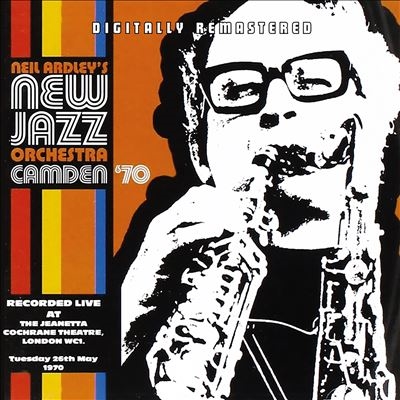
Originally released in 2008, Neil Ardleys Camden 70 has been bootlegged several times. Its re-release in 2024 should remedy that. His 17-piece New Jazz Orchestra was on tour supporting the 1969 NJO album Le Dejeuner Sur LHerbe, which is universally regarded as a jazz classic.
This performance is drawn from the Jeanetta Cochrane Theatre in London, on May 26, 1970, during the Camden Festival. The Orchestra was touring with Colosseum, and its members, including guitarist Clem Clempson, saxophonist Dick Heckstall-Smith, bassist Tony Reeves, keyboardist Dave Greenslade, and drummer Jon Hiseman, played in both bands.
Though NJO was missing key players from its earlier incarnation, you wouldnt know it from this recording. In addition to Colosseums players, the lineup included saxophonists Barbara Thompson (she also played flute), Dave Gelly (who penned the excellent liner essay here), and Jim Phillip. Harry Beckett and Henry Lowther played two of four trumpets. Dick Hart played tuba, while the trombone section featured Mike Gibbs who, along with Ardley, Mike Westbrook, and Michael Garrick, made up the new breed of Brit jazz composers. Clempsons electric guitar added color, texture, and a soupcon of rock energy.
The 12- track program begins with four showstoppers: George Russells iconic "Stratusfunk" weds modernist hard bop to Ellingtonian harmonics and swings hard. Other wonderfully executed covers here include Miles Davis "Nardis," John Coltranes "Naima," Gibbs cosmopolitan "Tanglewood," and Garricks "Dusk Fire." Jack Bruces "Rope Ladder to the Moon" suffers somewhat from the muddy sound of Clempsons vocals (theyre nowhere near as fine as Bruces, anyway), though the funky interplay between Greenslades organ and the saxophonists is astonishing.
The lions share of material here is from Le Dejeuner Sur LHerbe; seven of its eight tracks are performed consecutively in suite form -- the Davis, Coltrane, and Garrick tunes were all part of the studio album. These are introduced by a long, sloppy reading of "Dusk Fire," redeemed by stunning solos and fiery ensemble interplay in its 12-minute duration. "Naima" and "Nardis" offer Ardleys tastefully restrained orchestral charts. Theyre followed by a long, bluesy, flamenco-tinged version of Andres Segovias "Study" that includes a gorgeous soprano solo from Thompson and charts that recall Ardleys obsession with Gil Evans. Gibbs composed "Rebirth," which features Greenslades Hammond B-3 that threatens to derail the entire proceeding -- reeds and brass had other ideas. After the gentle-to-the-point-of-somnambulance of "Ballad" comes the Dejeuner title piece, carried by a brief yet brilliant big-band orgy. The closer, "National Anthem & Tango," is a throwaway. Camden 70 not only fills in Ardleys and NJOs tenure together -- he left in 1971 -- but is a striking aural portrait of the composer, conductor, and arranger at a crossroads in British jazz, presenting his original music in an evolutionary aesthetic process. ~ Thom Jurek
Rovi