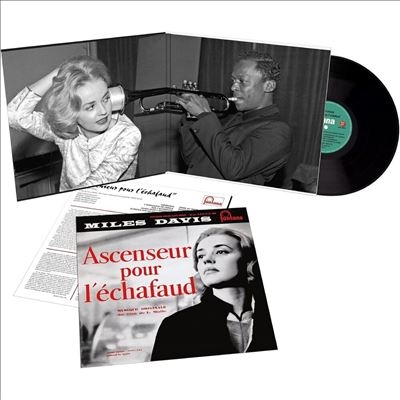
ルイ・マル監督による1958年公開のフレンチ・ノワール映画『死刑台のエレベーター』のサウンドトラックの180g重量盤LP。
マイルス・デイヴィスがこの映画の音楽を担当したことも伝説の一部。これほど決定的なサウンドトラックも珍しい。70年近く経った今、神話を越えて、極度のドラマチックな緊張感に包まれたこの張りつめた熱のこもった録音は、マイルスの最高傑作のひとつであり続けている。
基本的なアウトラインは以下の通り。ジャン=ポール・ラプノーはマルに、この映画のサウンドトラックをマイルス・デイヴィスに依頼することを提案し、マルは内輪の試写会に出席した後、音楽の録音に同意した。デイヴィスは1957年11月にパリのクラブ・サンジェルマンで演奏していたが、12月4日、4人のサイドメンを何も準備させずにレコーディング・スタジオに連れてきた。デイヴィスは、ホテルの部屋で組み立てたいくつかの初歩的な和声シークェンスをミュージシャンに渡しただけで、筋書きが説明されると、バンドは事前に作曲したテーマなしで即興演奏を行い、音楽的に関連する映画シーンの編集ループが背景に映し出された。ベーシストのピエール・ミケロは1988年に、「マイルスはただ2つのコード、ニ短調とC7を、それぞれ4小節ずつアドリブで演奏するように言った」と回想している。通常、マイルスはほとんど計画を立てなかったが、自分が何を望んでいるかは正確に知っていた。
この音楽はフォンタナから10インチでリリースされ、フランスのアカデミー・シャルル・クロからグランプリを受賞した。アメリカではコロムビアから12インチLP『Jazz Track』のA面としてリリースされ、1960年のグラミー賞で最優秀ジャズ・パフォーマンス賞(ソロまたは小編成)にノミネートされた。
このオリジナル・レコーディングの美しいリイシューは、GZで180gレコードにプレスされ、ボリス・ヴィアンのオリジナル・ライナーノーツ、ジャン=ピエール・ルロワールが撮影したマイルスとジャンヌ・モローの象徴的なスタジオ写真、そしてフランク・ベルジュロによるこの常軌を逸した音楽を生み出した状況についてのエッセイとともに、豪華なゲートフォールド・チップオン・ジャケットに収められている。
・オリジナル・ライナーノーツの英訳と、ジャン=ピエール・ルロワールが撮影したマイルスとジャンヌ・モローのアイコニックな写真が入った、豪華ゲートフォールド・チップオン・ジャケット仕様。
・マイルス・デイヴィスからルイ・マルへのプレゼント(A Present from Miles Davis to Louis Malle)というエッセイが2ページ挿入されている。
〈パーソネル〉 Miles Davis(tp) Barney Wilen(ts) Rene Urtreger(p) Pierre Michelot(b) Kenny Clarke(ds)
Recorded at Le Poste Parisien - December 4/5 1957
発売・販売元 提供資料(2023/12/27)
Jazz and film noir are perfect bedfellows, as evidenced by the soundtrack of Louis Malle's Ascenseur Pour L'Echafaud (Lift to the Scaffold). This dark and seductive tale is wonderfully accentuated by the late-'50s cool or bop music of Miles Davis, played with French jazzmen -- bassist Pierre Michelot, pianist Rene Urtreger, and tenor saxophonist Barney Wilen -- and American expatriate drummer Kenny Clarke. This recording evokes the sensual nature of a mysterious chanteuse and the contrasting scurrying rat race lifestyle of the times, when the popularity of the automobile, cigarettes, and the late-night bar scene were central figures. Davis had seen a screening of the movie prior to his making of this music, and knew exactly how to portray the smoky hazed or frantic scenes though sonic imagery, dictated by the trumpeter mainly in D-minor and C-seventh chords. Michelot is as important a figure as the trumpeter because he sets the tone, as on the stalking "Visite du Vigile." While the mood of the soundtrack is generally dour and somber, the group collectively picks up the pace exponentially on "Diner au Motel." At times the distinctive Davis trumpet style is echoed into dire straits or death wish motifs, as on "Generique" or "L'Assassinat de Carala," respectively. Clarke is his usual marvelous self, and listeners should pay close attention to the able Urtreger, by no means a virtuoso but a capable and flexible accompanist. This recording can stand proudly alongside Duke Ellington's music from Anatomy of a Murder and the soundtrack of Play Misty for Me as great achievements of artistic excellence in fusing dramatic scenes with equally compelling modern jazz music. ~ Michael G. Nastos
Rovi