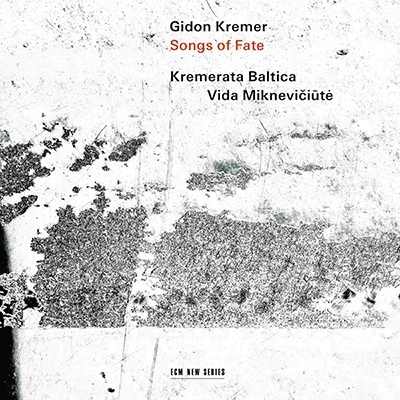
バルト三国の作曲家の作品から人生の意味を探る鬼才ヴァイオリニストの"運命の歌"
ラトビア、リガ生まれのヴァイオリニスト、指揮者、ギドン・クレーメルのニュー・アルバム『Songs of Fate』。バルト三国の作曲家、ラミンタ・シャルクシュニーテ、Giedrius Kuprevicius、イェーカブス・ヤンチェフスキスと、ポーランド出身のユダヤ人、ミェチスワフ・ヴァインベルクの作品を取り上げています。リトアニアの女性作曲家シャルクシュニーテのヴァイオリン、チェロ、ヴィブラフォンと弦楽オーケストラのための『This too shall pass』は、地球上のすべての避けられないはかなさを音楽で表現した優れた作品です。Giedrius Kupreviciusはリトアニア以外ではあまり知られていないかもしれませんが、故郷のリトアニアでは長い間非常に多才な作曲家、カリヨンの巨匠、教育者としてだけでなく、文化的な政治家、著者としても重要な存在です。クレーメルはこの作曲家の大作『The Star of David』の一部を組み合わせ、ユダヤの文脈を前面に持ってきたモザイクを作り上げました。ドイツのナチスとスターリンの"粛清"という二重の恐怖によって運命を決められたヴァインベルクの作品はヴァイオリン・ソナタ、室内楽作品、交響曲など、これまでもクレーメルは録音してきましたが、今回はあまり知られていない作品を選んでいます。アンドレイ・プシュカレフがソロ・ヴァイオリンと弦楽オーケストラのために編曲した『Nocturne』と、1942年に書かれた『アリア』Op.9、そして『ユダヤの歌』Op.13です。『ユダヤの歌』はヴァインベルクがモスクワに移る直前にワルシャワで完成した、ポーランド系ユダヤ人の詩人イツホク・レイブ・ペレツによるイディッシュ語の歌で、ソヴィエト連邦の戦争中には『子供の歌』というタイトルで印刷されました。アルバムは1992年リガ生まれのイェーカブス・ヤンチェフスキスによる弦楽オーケストラのための作品『Lignum』で締めくくられます。木に関する本からインスピレーションを受けて作られた曲です。ヤンチェフスキスによるとこの作品は木々との対話のようなもので、「それは言葉のコミュニケーションというよりも、むしろ聞くことと理解することを求めること…音楽は私たちにまだ知られていない何かを明らかにする素晴らしい手段です。この作品は私の対話であり瞑想です」と語っています。
リトアニアのソプラノ歌手ヴィダ・ミクネビキューテ、ラトヴィアのチェリスト、Magdalena Ceple、ウクライナ、キーウ出身のヴィブラフォン奏者アンドレイ・プシュカレフ、そしてクレーメルが1997年にバルト三国の若手演奏家を集めて設立したクレメラータ・バルティカと共演しています。
「人生は短く、私たちの使命は与えられた空間を意味で満たし、その人生に意味を与えることです」「このプログラムはすべての人に語りかけることを目的としています。途中で悲劇的な運命を思い起こさせ、私たち一人一人が聞かれる価値のある、そして耳を傾けるべき"声"を持っていることに気づかせてくれます…リスナーの方々が"認識"し、さらに共感できるかもしれない意味を届けることができればと願っています」―ギドン・クレーメル
ユニバーサル・ミュージック/IMS
発売・販売元 提供資料(2023/12/08)
Few performers have reshaped the classical repertory like violinist Gidon Kremer. He was key in bringing the music of composer Mieczysław Weinberg to general attention, and he identified a highly productive fount of music where minimalism met avant-garde styles. Hardly anything Kremer has done has been anything less than well-considered and well-executed, but with Songs of Fate, he and his ensemble Kremerata Baltica outdo themselves. The album is inspired by Kremers Jewish background, something he hasnt made a point of in the past, but that seems to snap much of his output into relief after one has heard this. The program consists of works by Baltic composers, apparently not all of them Jewish, and three of the Jewish Songs, Op. 13, of Weinberg, which have a quality of Jewish self-revelation akin to that which Kremer is accomplishing here. There are also two highly appealing early Weinberg pieces that could be added to the repertory of any orchestra. Most of the music involves Kremers string orchestra, with novel solo instruments such as a svilpaunieki and a vibraphone. The program was recorded in two sessions, one of them live, in 2019 and 2022; only the works by Raminta Šerkšnytė and Jēkabs Jančevskis were recorded after the Russian invasion of Ukraine, and none were done prior to the attacks of October 7, 2023, in Israel. Yet both events seem to hang over the music, which rises from a mix of Jewish roots and uneasy dissonance to a soaring finale in Jančevskis Lignum. This is a powerful album, and ECMs crack engineering staff unifies the diverse sound sources. It has the feel of a project that came together as Kremer and the other performers realized its impact, and one may be thankful that they did. ~ James Manheim
Rovi