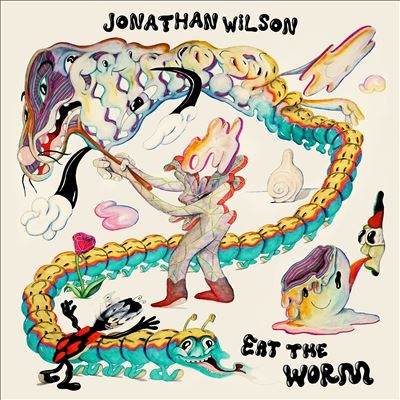
Eat the Worm, singer/songwriter/producer Jonathan Wilsons fifth studio album, is a showcase for a musician seeking to liberate himself from things he already knows. Since releasing Dixie Blur in 2020, Wilson has been busy producing for other artists (Father John Misty, Billy Strings, Margo Price) and serving as Roger Waters guitarist and music director. He also encountered the songs of Jim Pembroke, a British songwriter who moved to Finland, fronted Wigwam, and issued a handful of weird, wily solo albums. They seduced Wilson with their experimentation and strangeness; they simultaneously focused and distracted him. He began curating home-recorded demos, instrumental ideas, and fragments to foment new creations, he combined old lyrics and wrote new ones in seeming non sequiturs. While different from what hes released before, it bears enough of his signature to indelibly reflect his persona. Wilson plays most instruments here, but also enlisted some guests. To be honest, Eat the Worm really feels like Harry Nilsson and Randy Newman writing, recording, and drinking heavily in a late-night studio session. The lyrics are voluminous and framed by loopy, expansive production.
Opener "Marzipan" comes across as warped, vintage Brit-pop if it was written by Tom Waits and performed by Blur. "Bonnamossa" (yes, it namechecks the prolific blues guitarist) sounds like a psychedelic sea shanty with skittering synthetic beats, pillowy guitars, vibes, and strings. The humorous "Hollywood Vape" reflects the musical legacy of Laurel Canyon with a quiet, dreamy melody and acid-drenched production. "The Village Is Dead" is a string-laden rocker that channels music in the East Village from Cafe Wha to Jimi Hendrix to Stevie Ray Vaughan to jazz. The dreamy, pillowy "Wim Hoff" -- named for the Dutch extreme athlete -- offers truly baked lyrics: "...Hung out with Daniel Lanois/In a drug-riddled sprawl/We were smoking paradise/We were Lightnin Hopkins jaw…." The single "Charlie Parker" is nearly a suite. It channels early the rock & roll of Jerry Leiber, Mike Stoller, and Doc Pomus with strings in waltz time! It shifts into darkly tinged theatrical pop and then back again as Wilson name-checks the Wright Brothers, Kurt Elling, Al Jarreau, and Larry Bird. The early rock returns under a scatting sax break that represents the iconic musician. A Pink Floyd-esque slide guitar, synth, and string coda carry it out. A The early rock returns under a scatting sax break that represents the iconic musician. A Pink Floyd-esque Baroque piano and string pop introduce "East L.A." -- a searching ballad about aimlessness, artistic frustration, and stasis. Closer "Ridin in a Jag" is maximal. Wilson loosely stitches together Cali singer/songwriter fare and indie pop. (It feels like Nilsson in the studio with producer David Axelrod.) Its biting, humorous lyrics poke merciless fun at himself and L.A. entertainment culture before transforming into a tender love song. Fans of Wilsons earlier records might struggle a bit with Eat the Worms many directions, but before long, the album, despite its sense of adventure, slots easily into his restless, immersive, utterly imaginative catalog. ~ Thom Jurek
Rovi