Soul/Club/Rap
LPレコード

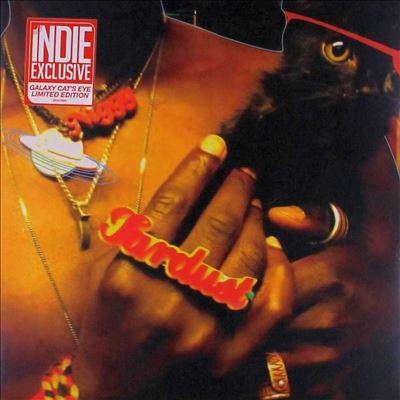
The Inevitable Rise and Liberation of Niggy Tardust<限定盤/Colored Vinyl>

0.0

販売価格

¥
5,390
税込
還元ポイント

販売中

お取り寄せ
発送目安
7日~21日

お取り寄せの商品となります

入荷の見込みがないことが確認された場合や、ご注文後40日前後を経過しても入荷がない場合は、取り寄せ手配を終了し、この商品をキャンセルとさせていただきます。

フォーマット LPレコード
発売日 2023年07月21日
国内/輸入 輸入
レーベルFader
構成数 2
パッケージ仕様 -
規格品番 FADL1151
SKU 842812175534

構成数 : 2枚

  1. 1.[LPレコード]
  2. 2.[LPレコード]

作品の情報

メイン
アーティスト: Saul Williams

商品の紹介

Trent Reznor's Nine Inch Nails project roared back to life after his deal with Interscope came to an acrimonious close. He issued two self-released albums, the instrumental set Ghosts I-IV and Slip, which were both given away free on the internet before being released formally. That said, it is this production project of his by poet cum rapper Saul Williams that may be of the greatest interest aesthetically for two reasons: first there is the collaborative aspect of the work, equal parts Williams' and Reznor's. Second, it too was given away online before the disc appeared on the Fader label. The Inevitable Rise and Liberation of Niggy Tardust grafts more than its title from David Bowie's classic The Rise and Fall of Ziggy Stardust and the Spiders from Mars. Niggy is Williams' alter ego just as Ziggy was Bowie's. By invoking the master of disguise, the weight falls on Williams' to deliver an album worthy of that comparison. Williams' Niggy feels no such pressure but he lays down a ton anyway. From Reznor's textured ambience and scorched earth synths, Williams has crafted harder beats here than on anything he's done before. (It's more focused than anything Reznor's done in recent years, too.) If anything, this feels like the dense, layered steel noise laid down by the Bomb Squad with Public Enemy, updated for the 21st century -- check the constant loop of Chuck D's voice from Welcome to the Terrordome as a rhythmic device on "Tr(n)igger." This is Saul Williams unleashed. The shredded synth and rhythm machines on "Black History Month" provoke Williams: "Can you feel it/I'm tougher than bullets baby/Nothin can save ya, better pray to your savior..." Bowie channeling Iggy channeling the Roots? And he's right in those opening lines: Williams ups the bar, embracing both resistance and empowerment with a conceptual wall of noise that breaks the back of the gangster MCs, and pushes hard on the media stereotype of hip-hop -- until it breaks. A fantastic example of this is the choice of U2's "Sunday Bloody Sunday" as a cover. It keeps the melody but turns the music inside out, leaving rags in its wake. For Williams, "Sunday, Bloody Sunday" is everyday in the neighborhood, but it needn't be. He answers it immediately on "Break": "And when my fears arise/I blow 'em out/Get it out, spit it out, get it out..." as the sonic wall tenses under his voice, then coils as he begins speaking white heat from the street to the heavens. Or maybe just the listener -- to Williams, they're the same. The searing beats and raw edges here are tougher than Trick's -- or anything in the scattered blur of trip-hop -- nor does it resemble the current hip-hop stream. This outsider blend is a partnership that feels like a new paradigm for hip-hop itself. Here, accepted and ignored notions of race and class are ripped to shreds leaving in their wake not a power structure but a different perception with rhythm as the soundtrack of that change. In "Ritual," Williams leaves the "corpses" of stereotypes "in the furnace." But he begins again on the spoken "Pedagogues of the Young Gods" (a bonus five-cut suite for the CD version). Those final five tracks are a self and cultural analysis, to a palette of crushing low end rhythms, warped futuristic synth loops (a la Bowie's Low), and a skittering drum kit, in a search and destroy mission for remaining ignorance. This is Williams' finest moment, and interestingly, one of Reznor's, too. ~ Thom Jurek
Rovi

メンバーズレビュー

レビューを書いてみませんか?

読み込み中にエラーが発生しました。

画面をリロードして、再読み込みしてください。