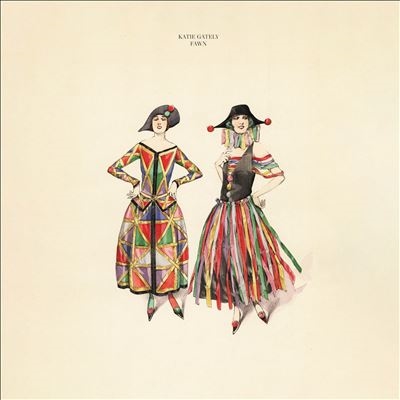
Just as Katie Gately honored her late mother with Looms fresh perspectives on death and grief, the producer/sound designers pregnancy inspired Fawn/Brute, an exploration of the complexities of bringing a new life into the world. Gatelys third album doesnt sound much like most other music about parenthood, although the hazy impressions of Tirzahs Colourgrade might be a kindred, sleep-deprived spirit. It does, however, sound exactly like the work of Gately, falling somewhere in between the unbridled avant-pop of Color and the emotional intensity of Loom. "Cleave," which traces a friendships breakup, feels like the next evolution of her debut albums mutant teen pop, with beats that hit like a slap in the face and stinging synths. The haunted feeling of Loom resurfaces when Gately delves into the anguish caused by pregnancy complications on "Meat," where a wailing theremin and breaking glass are among the cleverly layered sounds. Once again, Gatelys expertise as a sound designer ensures that no matter how much is going on within each song -- and usually, its quite a bit -- each sound gets its due. "Peeve" is one of the albums most spectacularly constructed tracks, with strafing tones, crisp vocals, braying saxophone, and a wealth of percussion pieced together in a way thats both precise and suggests the moment before a street party turns into a riot. But even if Fawn/Brute could be the offspring of Gatelys previous work, its got a mind of its own. Aptly enough for an album inspired by pregnancy, its tracks are teeming with life and almost uncomfortably filled with sounds as they reach their ends. "Seed" begins the record with musical mitosis, growing quickly from scuttling beats and Gatelys witchy vocals to audacious brass and the weighty beats that anchor and propel all of Fawn/Brutes experiments. Dedicated to her daughter Quinn (whos also alluded to in the albums artwork), "Fawn" offers a charming, somewhat crazed sonic portrait, with squirming, squealing tones that sound newly born, a beat thats perfect for bouncing a baby on a knee, and vocals bursting with fierce, proud love. When Fawn/Brute moves from light to shadow and Gately draws from her own teenage rebellion and love for post-punk and industrial music, the results are just as powerful. Boasting a nasty bass line fashioned from recordings of rattled cardboard shoe boxes, "Brute" gives an apocalyptic cast to the tug of war between freedom and parental responsibility; on "Chaw," the hail of digital noise and swarming spoken word vocals take Gatelys music to extremes that capture the drama of adolescence. Though moments like "Howl"s collage of pure id -- cheering, moaning, barking, growling -- convey childlike glee, at times Fawn/Brutes impudent maximalism borders on overwhelming. Nevertheless, Gatelys meditations on mothers and daughters, and bodies creating and betraying, are fascinating, and Fawn/Brutes expressions of the darker corners of childhood and motherhood might be even more revealing than more conventional musical memoirs. ~ Heather Phares
Rovi