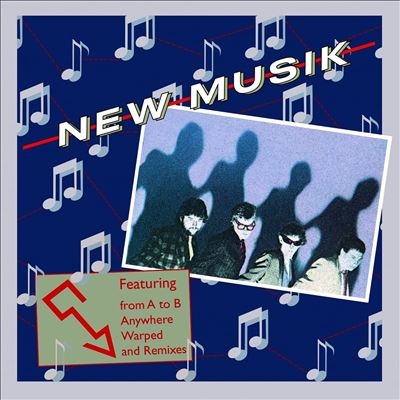
New Musik were a band that slipped through the cracks of the early-80s music scene. Too weird to be mainstream pop, too straight to be new wave, their three albums are nonetheless near-perfect examples of how classic pop songcraft met with newfangled technology to make modern, forward-thinking music. From A to B: The Sony Years collects their albums and adds a fourth disc of single mixes, edits, and remixes while presenting a document of the bands far-too-short career. Their first album, 1980s From A to B, blends guitars with keyboards, both organic and synthesized, then dials in a punchy, human-derived rhythm section. Tony Mansfields vocals are an intriguing mix of heartfelt and detached, and are often doubled with a treated second voice. They put this interesting sound to use on songs that are super-hooky and upbeat ("Sanctuary," "Straight Lines"), quirky ("Living by Numbers"), and lushly sophisticated ("A Map of You"). 1981s Anywhere is a little more polished and full of electronic tricks, drum machine beats, and synth pads. Mansfields 12-string acoustic guitar brings warmth to many of the songs, though, and his vocals sound a little more impassioned. Its more assured and focused overall and has just as many top-notch songs, especially the dancefloor-oriented "While You Wait," the whirring ballad "This World of Water," and "Design," an angular pop song thats the equal of anything the new wave groups at the top of the charts were releasing. By the time of 1983s Warp, New Musik were down to a duo and decided to record everything apart from the occasional guitar using synths and digital machines, one of the first albums to be made in that fashion. The result is stunningly good. There werent a lot of bands making songs as catchy as the Chic-meets-machine "Here Come the People," as melancholy and cold as "A Train on Twisted Tracks," or as well-arranged as "All You Need Is Love" -- not to be confused with the Beatles song, though they also do an odd cover of it directly after. There also werent many groups with the same skill at blending real sounds with synthesized sounds, then using that mixture so perfectly that it would stand up over four decades later. If having their albums together in one place wasnt enough, the disc of extra tracks unearths some gems. Thats where one can find their best pop songs, like the straight-ahead rocker "Sad Films" or the bubbling "Shes a Magazine," which were for some reason stranded on B-sides. Its also where the band invented ambient techno with the echoing, oddly dubby "24 Hours from Culture (Part 2)." New Musik may have been a little too smart for the room in the early 80s, a little too difficult to pigeonhole. Now one can just check them out with no preconceived notions of whats too pop or whats too new wave and just listen to them for what they are: one of the most inventive and interesting bands of their time. ~ Tim Sendra
Rovi