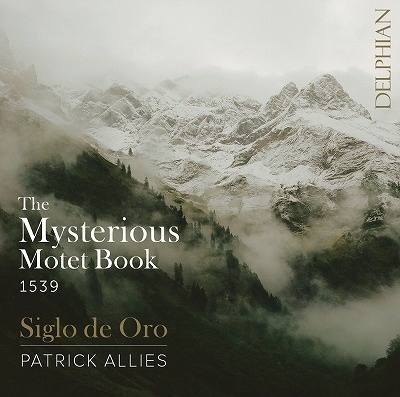
シグロ・デ・オロ 新録音! 1539年のミステリアスなモテット集!
「スペイン黄金世紀」を意味する新世代ヴォーカル・アンサンブル、"シグロ・デ・オロ"!
1530年代後半の謎めいたモテット集に生命を吹き込む!
2014年にロンドンのスピタルフィールズ音楽祭でデビューした新世代をリードする合唱団、「スペイン黄金世紀」を意味する"シグロ・デ・オロ"のアルバム第5弾!
1530年代後半、ミラノの作曲家ヘルマン・マティアス・ヴェレコーレは様々な作曲家の宗教的音楽を編纂し、アルプスを超えてドイツ帝国(当時)のシュトラースブルク(現在のフランス、ストラスブール)の出版社Peter Schoefferに送り、5冊のパートブックが1539年に出版されました。カトリックのミラノからプロテスタントのシュトラースブルクへ、宗教の垣根を超えて届けられた聖歌集。宗教改革によりラテン語の合唱が行われなくなった都市で、このモテット集が出版された目的は何だったのでしょうか。
シグロ・デ・オロはケンブリッジ大学のDaniel Trocm-Latter博士と共同でこのアルバム制作に取り組み、この謎めいた作品集から、ニコラ・ゴンベール、ジャケ・ド・マントヴァ(マントヴァのジャケ)、ジャック・アルカデルト、アドリアン・ヴィラールトといった有名な作曲家のモテットをはじめ、シモン・フェラリエンシスやヨハネス・サートンといったあまり知られていない作曲家の作品も紹介することに成功しました。全曲世界初録音となるこれらのモテットを、緻密な音楽学的研究ときめ細やかで豊かな歌声が織り成します。
東京エムプラス
発売・販売元 提供資料(2022/07/21)
This release from the fine vocal group Siglo de Oro and director Patrick Allies showed up on classical best-seller lists in the autumn of 2022, an unusual feat for a fairly specialized album of 16th century music. Perhaps buyers were intrigued by the Mysterious Motet Book concept and hoped for an answer to the mystery. As it happens, they wont really get one. The motet book in question, entitled Cantiones quinque vocum selectissimae, was published in Strasbourg in 1539 after having been sent there by a Milanese musician. The mystery is why a publisher in Strasbourg, then under Germanic Protestant rule (the powers that be even fired the choristers at the citys magnificent cathedral), would have issued a book of Catholic choral music in Latin, for which there would have been no local market. The annotations, which are quite detailed, suggest that the publisher might have been trying to reach buyers in nearby Catholic lands. Whatever the case, the music itself is gorgeous, and much of it is all but unknown. The most familiar composers are Adrian Willaert and Nicolas Gombert (someone once called them the "Ert Brothers"). The dense polyphony of both has always been something of a tough slog for modern listeners, although both were hugely admired in their own time, and here, one can see why. Their music is the most complex and variegated on the album. Against these are set works by composers who are not even names in the history books, and these are simpler and luminous, making for a convincing and varied program. Sample the Christmas motet Haec dies quam fecit by (probably) Johannes Sarton or Simon Ferrariensis Ave et gaude gloriosa virgo. The small Siglo de Oro choir is richly sonorous, and St. Georges Church in Chesterton near Cambridge is an ideal acoustic environment. This is a rare example of a specialist Renaissance album of great general appeal. ~ James Manheim
Rovi