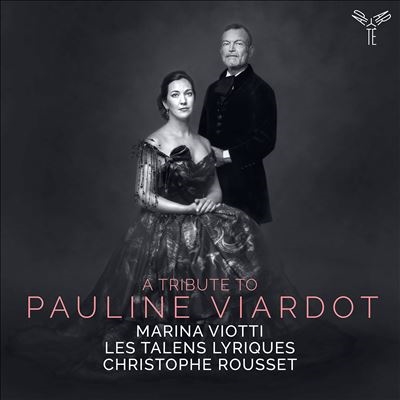
ロマン派音楽も超新鮮!
ルセとレ・タラン・リリクがポリーヌ・ヴィアルドの伝説を再現
ルセとレ・タラン・リリクがロマン派オペラに挑戦。これまでもグノーの「ファウスト」で新鮮な解釈を見せましたが、今回はベルリオーズ、マスネ、サン=サーンスなどイメージから遠い作曲家が並んでいるのが興味津々。ポリーヌ・ヴィアルドゆかりのオペラ・アリアが選ばれていますが、ロッシーニの「セミラーミデ」序曲とドニゼッティの「ファヴォリータ」序曲という純オーケストラ・ナンバーも味わえます。
ポリーヌ・ヴィアルド(1821-1910)は19世紀フランスの大歌手。ロッシーニに認められ、リストにピアノを師事、ショパンやチャイコフスキーの親しい友人で、ツルゲーネフと長年同棲。後年は幼いレイナルド・アーンの才能を評価し可愛がるなどパリ音楽史のキーパーソンでもありました。
マイヤベーアの「予言者」、サン=サーンスの「サムソンとデリラ」、グノーの「サッフォー」は彼女のために作曲され、ブラームスの「アルト・ラプソディ」を世界初演したことでも知られていますが、ベルリオーズの「トロイアの人々」にも積極的に関わり、グルックの「オルフェオ」のベルリオーズによる近代オーケストラ編曲初演もヴィアルドが出演、聴衆を熱狂させたことが伝説になっています。
それら伝説作品をスイス出身のフランスのメゾ、マリーナ・ヴィオッティがヴィアルドに成り代わり再現。あたかも乗り移ったかのような歌唱を聴かせてくれます。
どの曲も美しいメロディにあふれ、声の魔力とともに圧倒させられます。
キングインターナショナル
発売・販売元 提供資料(2022/07/28)
Album releases devoted to re-creating the repertory of singers from the Baroque era have become common enough, yet those treating the major singers of the 19th century have not, even though the latter are closer to us in time. Here, mezzo-soprano Marina Viotti pays tribute to Pauline Viardot (1821-1910), the younger sister of Maria Malibran, who stepped into the spotlight after Malibrans death in a horseback riding accident. An evidently charismatic figure who attracted courtship from some of the top creative figures in Europe, Viardot had a long career that began in the 1830s and extended to at least 1870, when she gave the premiere of Brahms Alto Rhapsody. She spoke Spanish, French, Italian, English, German, and Russian, the latter fluently enough that she could convince native speakers that she was one of them. Camille Saint-Saens, who dedicated his opera Samson et Dalila to her, said this of her voice: "It was not a velvet or a crystal voice, but rather harsh, pungent, like the taste of a bitter orange, made for tragedy or epic verse, superhuman rather than human." This does not quite describe Viottis voice, but she has a rich, if rather monochrome, sound and an imperious quality that is appropriate here. Christophe Rousset, leading the historically oriented Les Talens Lyriques, gets fine results in the instrumental selections, notably the overture to Rossinis Semiramide. The program is well chosen; it doesnt showcase all of Viardots languages, but the mix of French and Italian arias must have been characteristic of her programs. Of course, there is something speculative about recordings like this, but one cant help but think the figure of Pauline Viardot comes a bit more alive here and that 19th century opera buffs will be glad to have the album; enough felt that way to place the album on classical best-seller charts in the fall of 2022. ~ James Manheim
Rovi