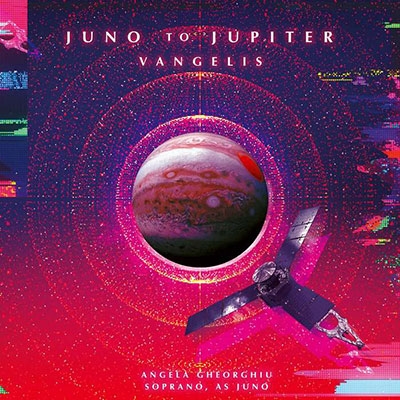
After releasing the choral symphony Mythodea: Music for the NASA Mission - 2001 Mars Odyssey in 2001, composer and multi-instrumentalist Vangelis Papathanassiou went on a recording hiatus for 15 years. He issued soundtracks for the films El Greco and Paris 1968, but no solo albums. The composer returned with 2016s conceptual Rosetta, based on the ESA (European Space Agency) mission that landed a probe on the comet 67P/Churyumov-Gerasimenko. Five years on, Juno to Jupiter returns to Vangelis career-long obsession with space exploration. The album is inspired by NASAs launch of space probe Juno to Jupiter in 2011 -- now extended until 2025 -- to explore the planets atmosphere, undersurface, and many moons. Atlas Push samples various sounds from the launch event amid massive ambient textures. Inside Our Perspectives offers sweeping layers of electronics, percussion, loops, and orchestral sounds in pulsed and plotted cadences that alternately evoke the Orb, Ultramarine, and mid-period Tangerine Dream. Out in Space recalls the Blade Runner score with cascading synths, open-toned brass and winds, tympani, and analog electronics.
Vangelis only accompanist on the date is operatic soprano Angela Gheorghiu. She plays the voice of mythological Greek goddess Juno (aka Hera) as she pierces the clouds concealing Jupiter (aka Zeus). Junos Quiet Determination features a subdued, wordless vocal chorus stitched inseparably to restrained, painterly instrumentation, but eventually reaches a dramatic conclusion to introduce the symphonically dynamic Jupiters Intuition. Spaces Mystery Road commences with a snare shuffle as strings, analog synths, and helicopter sounds emerge under an acoustic piano to deliver a noirish theme with seemingly sinister intent. Junos Tender Call is a ghostly yet deeply moving interlude that features Gheorghius gorgeous soprano wordlessly singing above chamber strings and woodwinds, harp, and sweeping piano. Junos Ethereal Breeze offers her multi-tracked vocals as a chorale. They emerge from ether amid space blips, alien sounds, a droning cello, and a lone sequencer as the tension of the unknown meets awe and wonder. Her full operatic power is realized on Hera/Juno: Queen of the Gods. It commences with sparse, plucked harp sounds, in call-and-response with a taut ambient backdrop that slips in amid reverbed strings, piano, and synth. When she sings, the heavens open and pathos, desire, and longing pour out. Dissonance entwines with majesty on Zeus Almighty, offering a processional atmosphere and dramatic tone clusters. They are expanded upon with other sonorities in Jupiter Rex, as choral voices wind around bells, chimes, rumbling drums, dissonant winds, brass, and strings. Order is restored by an acoustic piano and harp in Junos Accomplishments; they prepare a pillowy sonic ground for Gheorghius transcendent singing. In Serenitatem makes use of reverbed a cappella choral voices wordlessly reflecting the vast, empty reaches of space before bells and electronics join them in closing. Juno to Jupiter, like Mythodea, is a major late-career work from Vangelis. It is carefully articulated and deeply illustrative of both its subject matter -- the loneliness and grandeur of space travel -- and its metaphorical referents in Greek mythology. ~ Thom Jurek
Rovi