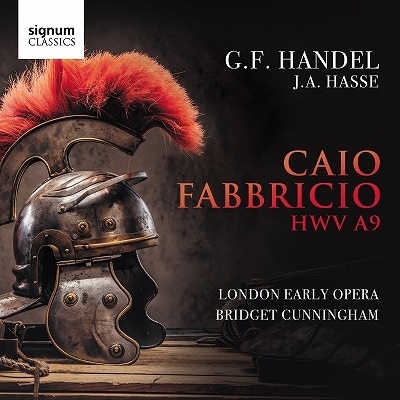
ヘンデルのスペシャリスト、ブリジット・カニンガム&ロンドン・アーリー・オペラ!
ハッセの作品をベースにしたヘンデルのパスティッチョ・オペラ世界初録音!
イギリスの女流チェンバリストでありオペラ指揮者、音楽学者のブリジット・カニンガムが率いるロンドン・アーリー・オペラ。「イタリアのヘンデル」、「ヴォクソールのヘンデル」、「アイルランドのヘンデル」など、様々な角度でヘンデルと同時代の音楽を取り上げてきたスペシャリストたちによるヘンデル・プロジェクト最新盤は、ヨハン・アドルフ・ハッセの初期のオペラ(1732年作)を元に、ヴィンチ、ポッラローロ、アルビノーニ、セリット、レーオなど、様々な作曲家による18世紀ナポリの素晴しいアリアを取り入れ、ヘンデルがドラマティックなレチタティーヴォを作曲し全体をまとめ上げたパスティッチョ・オペラ 《カイオ・ファブリッチョ》。1733年ロンドンで初演された作品で、ブリジット・カニンガムの校訂により世界初録音が実現しました。
東京エムプラス
発売・販売元 提供資料(2022/05/24)
Listeners glancing at the graphics before listening to the music here may be surprised that the music seems distinctly un-Handelian. Thats because most of it is not by Handel. It seems a half-baked practice today, but 18th century operagoers were unfazed by so-called pasticcio operas, which took earlier materials, often by other composers, and perhaps added new material to make the whole thing fit together. Handel did this nine times, and even Mozart was involved in a few pasticcio (pastiche) operas. Caio Fabricio, HWV A9, dates from 1733, when Handel was under business and time pressures due to the new rival Opera of the Nobility established by his former star castrato, Senesino. To put something attractive on the stage quickly, he turned to an opera, Cajo Fabricio, by Johann Adolf Hasse, adding arias in the latest Neapolitan style by a variety of composers, deleting some of Hasses, and replacing Hasses lengthy recitatives with short ones of his own. Its debatable whether the revisions made the work dramatically any more sound, but English audiences were said to dislike long Italian recitatives, and anyhow, the story (it is a military tale about a Greek general, Pirro, from whose efforts comes the concept of the Pyrrhic victory) is not really the point. The attractions lie in the arias, which are strikingly different from Handel, fetching and melodic rather than muscular and polyphonically sinewy. This was the new stylistic breeze coming from Naples (and Venice), and apparently Londoners enjoyed the chance to hear the latest stuff. Indeed, this may be the main attraction for contemporary audiences as well; not only does the opera as a whole receive its world premiere here, but many of the composers involved are rarely heard. One of those is Giuseppe Sellito, and his aria, "E grande e bella quella mercede," offers another attraction, the chance to hear the rising mezzo of the day, Helen Charlston. Most of the singers catch the flavor of the new idiom, although the Italian of Miriam Allen sounds a bit swallowed-up in the inappropriate church acoustic. Nobody is pretending this represents a major part of Handels output, but for Handel lovers, it offers a way to hear a good-sized slice of the London operatic scene as Handels audiences would have heard it, and its no surprise to have seen the recording land on best-seller lists in the summer of 2022. ~ James Manheim
Rovi