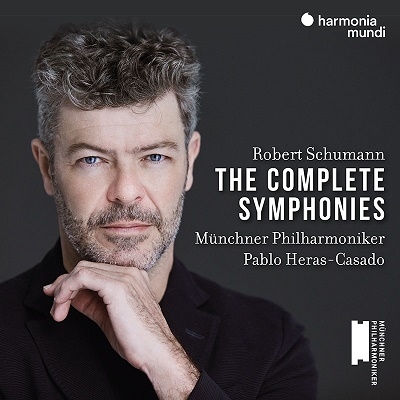
エラス=カサド&ミュンヘン・フィル シューマン交響曲全集の登場!
ミュンヘン・フィルのロマン派演奏の伝統とエラス=カサドの緻密なコンセプトが浮き彫りにする新しいシューマン像!
パブロ・エラス=カサド&ミュンヘン・フィルという注目の顔合わせによるシューマンの交響曲が、一挙に全曲で登場します。
エラス=カサドの指揮は、引き締まったリズムに貫かれていながら、濃密かつ華やか、そして鮮やか。130年を超える歴史あるミュンヘン・フィルのサウンドは完璧で、管楽器が華やかに鳴り響く場面での壮麗な響きはもちろんのこと、室内楽のように濃密な場面でのたっぷりとした歌など、エラス=カサドとともに、これ以上なく生き生きとしたシューマン像を響かせます。シューマンは、ベートーヴェンの影に押しつぶされることなく、交響曲という厳格な形式の中に、その自由なインスピレーションを注ぎ込みました。ミュンヘン・フィルのロマン派作品演奏の伝統と、エラス=カサドの綿密な曲作りにより、シューマンの魂や息遣いがすぐそこに感じられるとともに、シューマンが当時前衛的な作曲家であったことをあらためて認識させてくれるよう。新しいシューマン像が見事に浮彫になっています。全集で一挙に聴けることにもまた価値のある発売といえるでしょう。
パブロ・エラス=カサドは1977年グラナダ生まれの注目指揮者。オーケストラ、合唱からオペラまで、バロックからコンテンポラリーまで、底から湧き上がるエネルギーとパワー、そして曲に対しての緻密なコンセプトとそれを実現するプロセスと技術の確かさで、世界を魅了しています。これまでに4度(2009、2011、2019、2020)来日しており、特に2020年の第九公演は絶賛されました。また、2020年度第58回レコード・アカデミー大賞・交響曲部門(第九と合唱幻想曲/HMM-902431およびKKC-6234)&銅賞・管弦楽曲部門(ファリャ:三角帽子、恋は魔術師/HMM-902271およびKKC-6127)を受賞するなど、その演奏活動およびCDの評価と注目度ともに、非常に高いものがあります。
キングインターナショナル
発売・販売元 提供資料(2022/04/21)
Pablo Heras-Casado has made a mark as a conductor of early and contemporary music, regularly conducting the Freiburger Barockorchester in the former. Here, though, he takes the full might of the Munchner Philharmoniker in this survey of Robert Schumanns quintessentially Romantic symphonies. While all four symphonies were popular in the second half of the 19th century, the turn of the 20th century and the movement into modernism were not kind to these works, which suffered neglect for much of the century. After a lengthy dispute with her father, Schumann was finally able to marry Clara Wieck in 1840, Roberts Liederjahr ("Year of Song"), which set the new course for art songs and song cycles. Inspiration struck, and Schumann, with Claras encouragement, fully ventured into the world of German orchestral music. Roberts "Symphonic Year" of 1841 saw the composer write the bulk of his "Spring" Symphony No. 1 in B flat major. Op. 38, in just four days in January, orchestrating it with some revision for its March premiere. That year, he also wrote what would later be his Symphony No. 4 in D minor, Op. 120, which received much more extensive revision before it was eventually published in 1851. The highlight here is the Symphony No. 3 in E flat major, Op. 97 ("Rhenish"), the final symphony Schumann composed. Originally programmatic, the work draws inspiration from the Rhine and its people. Though the programmatic movement titles were removed before publication, listeners will likely discern the influence Berliozs and Beethovens program symphonies had on Schumann and get the sense of a story unfolding. Throughout, Heras-Casado keeps a fairly brisk pace, and the orchestra responds adeptly to his baton, delivering clean, engaging readings of these symphonies.
Rovi