〈オンライン&マケプレ〉全品20%ポイント還元キャンペーン開催期間:2025年12月19日(金)0:00~12月21日(日)23:59まで![※期間中のご予約・お取り寄せ・ご注文が対象 ※店舗取置・店舗予約サービスは除く]
Jazz
LPレコード

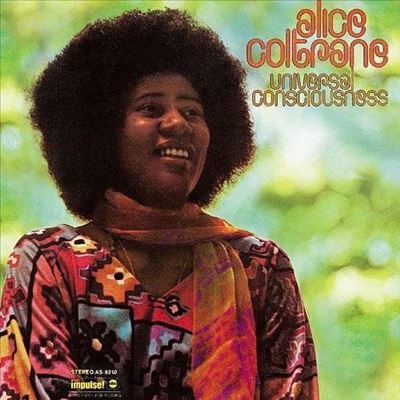
Universal Consciousness (45 Rpm)<限定盤>

0.0

販売価格

¥
4,190
税込
ポイント20%還元

販売中

お取り寄せ
発送目安
14日~35日

お取り寄せの商品となります

入荷の見込みがないことが確認された場合や、ご注文後40日前後を経過しても入荷がない場合は、取り寄せ手配を終了し、この商品をキャンセルとさせていただきます。

フォーマット LPレコード
発売日 2022年05月下旬
国内/輸入 輸入(ヨーロッパ盤)
レーベルAudio Clarity
構成数 1
パッケージ仕様 -
規格品番 ACL0081
SKU 889397107819

構成数 : 1枚

  1. 1.[LPレコード]

    【A面】

    1. 1.
      Universal Consciousness
    2. 2.
      Battle At Armageddon
    3. 3.
      Oh Allah
  2. 1.[LPレコード]

    【B面】

    1. 1.
      Hare Krishna
    2. 2.
      Sita Ram
    3. 3.
      The Ankh Of Amen-Ra

作品の情報

メイン
アーティスト: Alice Coltrane

商品の紹介

1971年に発売されたインド音楽の影響を強く受けた5thアルバム
亡き夫ジョン・コルトレーンに捧げた『Monastic Trio』、代表作でもあるスピリチュアル名盤『Journey in Satchadananda』など彼女がこれまでに発表した4作品に共通するスピリチュアルジャズ・テイストは継承しつつ、前年に5週間かけて旅をしたというインド音楽からの影響が強く反映された作品。オルガン・トリオやストリングスという編成にはラシッド・アリ、ジミー・ギャリソン、ジャック・ディジョネットなどお馴染みのメンバーも参加。

Alice Coltrane - Harp, Organ
Jimmy Garrison - Bass (A1, A3, B1, B2)
Jack DeJohnette - Drums (A1, A3, B1)
Rashied Ali - Drums (A2, B3), Wind Chimes (B3)
Clifford Jarvis - Drums (B1, B2), Percussion (B1)
Tulsi - Tambura (B1, B2)
Joan Kalisch, John Blair, Julius Brand, Leroy Jenkins - Violin (A1, A3, B1)
発売・販売元 提供資料(2023/02/27)

Recorded between April and June of 1971, Alice Coltranes Universal Consciousness stands as her classic work. As a testament to the articulation of her spiritual principles, Universal Consciousness even stands above World Galaxy as a recording where the medium of music, both composed and improvised, perfectly united the realms of body (in performance), speech (in the utterance of individual instrumentalists and group interplay), and mind (absolute focus) for the listener to take into their own experience. While many regard Universal Consciousness as a jazz album, it transcends even free jazz by its reliance on deeply thematic harmonic material and the closely controlled sonic dynamics in its richly hued chromatic palette. The set opens with the title track, where strings engage large washes of Coltranes harp as Jack DeJohnettes drums careen in a spirit dance around the outer edge of the maelstrom. On first listen, the string section and the harp are in counter-dictum, moving against each other in a modal cascade of sounds, but this soon proves erroneous as Coltranes harp actually embellishes the timbral glissandos pouring forth. Likewise, Jimmy Garrisons bass seeks to ground the proceedings to DeJohnettes singing rhythms, and finally Coltrane moves the entire engagement to another dimension with her organ. Leroy Jenkins violin, and Garrisons bottom two strings entwine one another in Ornette Colemans transcription, as Coltrane and the other strings offer a middling bridge for exploration. Its breathtaking. On Battle at Armageddon, the violence depicted is internal; contrapuntal rhythmic impulses whirl around each other as Coltranes organ and harp go head to head with Rashied Alis drums. Oh Allah rounds out side one with a gorgeously droning, awe-inspiring modal approach to whole-tone music that enfolds itself into the lines of organic polyphony as the strings color each intervalically. DeJohnettes brushwork lisps around the edges, and Garrisons bass underscores each chord and key change in Coltranes constant flow of thought. On side two, Hare Krishna is a chant-like piece that is birthed from minor-key ascendancy with a loping string figure transcribed by Coleman from Coltranes composition on the organ. She lies deep in the cut, offering large shimmering chords that twirl -- eventually -- around high-register ostinatos and pedal work. Its easily the most beautiful and accessible track in the set, in that it sings with a devotion that has at its base the full complement of Coltranes compositional palette. Sita Ram is a piece that echoes Hare Krishna in that it employs Garrison and drummer Clifford Jarvis, but replaces the strings with a tambura player. Everything here moves very slowly, harp and organ drift into and out of one another like breath, and the rhythm section -- informed by the tamburas drone -- lilts on Coltranes every line. As the single-fingered lines engage the rhythm section more fully toward the end of the tune, it feels like a soloist improvising over a chanting choir. Finally, the album ends with another duet between Ali and Coltrane. Ali uses wind chimes as well as his trap kit, and what transpires between the two is an organically erected modal architecture, where texture and timbre offer the faces of varying intervals: Dynamic, improvisational logic and tonal exploration become elemental figures in an intimate yet universal conversation that has the search itself, and the uncertain nature of our arrival, either musically or spiritually, at its very root. This ambiguity is the only way a recording like this could possibly end, with spiritual questioning and yearning in such a musically sophisticated and unpretentious way. The answers to those questions can perhaps be found in the heart of the music itself. More than likely, though, the music will make its way into the recesses of the human heart, where the question will be fully answered. This is art of the highest order, conceived by a b to be continued...
Rovi

メンバーズレビュー

レビューを書いてみませんか?

読み込み中にエラーが発生しました。

画面をリロードして、再読み込みしてください。