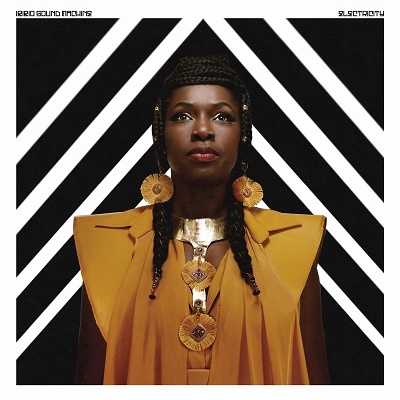
On their fourth long-player, Londons Afrofuturist collective Ibibio Sound Machine alter their sonic approach without shifting their musical focus. Electricity finds the band looking outside the organization for the first time to enlist Hot Chip (Al Doyle and Joe Goddard) as producers. Together, they shift the electronics forever at the core of their hybrid of Afrobeat, future funk, and post-punk, and move them way up front, weaving in crashing electro, Kraftwerk-ian new wave, and disco.
Opener "Protection from Evil" perfectly illustrates that formula. Al Doyles filthy, rubbery synth bassline ushers in a four-on-the-floor pulse and a bank of forceful synths before frontwoman Eno Williams delivers a onomatopoeic bilingual screed in her native Ibibio and English (she moves between the languages throughout the album). A propulsive drum kit, jagged ambient sounds, pitch-shifted keyboards, and a wonky bass create the hypnotic frame as she sings through a vocoder in the bridge. The title track follows. Williams emulates Kraftwerks robotized vocals in the intro as driving Casios and drum machines open the gate for a melody drenched in pop-soul. "Afo Ken Doko Mien" is a gorgeous love song; though articulated through a textured ambient electro, its tender, mystical, and spacious, saturated in nocturnal atmospherics. Williams crystalline singing hovers above droning, minimal keyboards, voicing the ache of her desire with clear intent. "All That You Want" weds progressive pop to LCD Soundsystem-esque synth vibes from Scotty Bayliss before deliberately evoking Giorgio Moroders sheeny electro-Euro-disco. "Wanna See Your Face Again," by contrast, is an orgiastic exercise in anthemic, souled-out house. "17 18 19" finds Williams offering a spoken word lyric a la Grace Jones atop a massive rhythm collision of break-laden disco and fractured post-punk. Speaking of disco, the neo-electro in "Truth No Lie" at once recalls the twin influences of Afrika Bambaataa and Francis Bebey -- Alfred "Kari" Bannermans lean, mean guitar solo is a treat as it foreshadows wrangling layers of angular synths and cascading beats. Strangely, "Oyoyo," a track deeply saturated in African polyrhythms, could have appeared on any of the bands earlier albums, but it sounds like a welcome outlier here. Its crisscrossing weave of hand drums, horns, double-timed snares, and kick drums framed by popcorn Casio buoys Williams trancelike singing. Where "Something Well Remember" is a disco anthem created for the heat of the dancefloor, "Almost Flying" channels poppy new wave amid blips and beeps with an infectiously hummable chorus. Set closer "Freedom" is an intense three-minute exercise in Afrofuturist broken beat, roiling neo-disco, and soul-drenched cinematic pop with guest vocalist Adenike Ajayi claiming the front as Williams soars in the cascading chorus.
Ibibio Sound Machine have always sought to get listeners onto the dancefloor. Electricity reveals that they wont have to coax. Here, they have taken their songcraft, production, and rhythm science to an entirely different level without sacrificing their Afrocentric roots. ~ Thom Jurek
Rovi
ロンドン生まれのナイジェリア人シンガー、イーノ・ウィリアムズの率いるディスコ・バンド、イビビオ・サウンド・マシーン。この4作目は初の外部プロデューサーとしてホット・チップを招聘し、〈フランシス・ベベイとジョルジオ・モロダーへの愛〉という共通項から密なプロセスを経て生まれたものだそう。ジョンズン・クルーやグレイス・ジョーンズらを想起させるニューウェイヴ~80sエレクトロの意匠がイーノの開放的な歌声に翼を与えている。
bounce (C)轟ひろみ
タワーレコード(vol.460(2022年3月25日発行号)掲載)