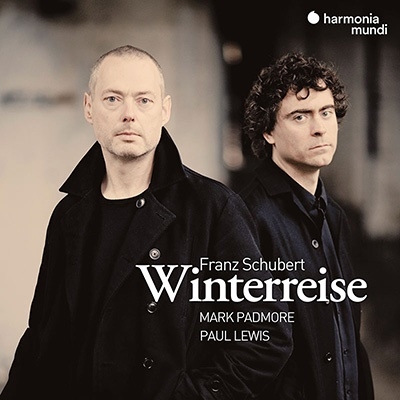
マーク・パドモアとポール・ルイスによる名演「冬の旅」が復活!
テノールのマーク・パドモアとポール・ルイスによる2008年録音の超絶名演「冬の旅」が復活します(HMU.907484/KKC.5398は廃盤)。
深々と冷え込む冬、どんよりと暗い空の下、ただただ雪を踏みしめて歩を連ねる旅人としての「私」の独白から始まる『冬の旅』。ピアノの前奏、それにつづくパドモアの声は、早くも聴衆を凍てつく冬の世界へと引きずりこみます。パドモアは、「私」として、そして同時に、恋にやぶれずたずたになった「私」を非常に冷静に傍観する第三者として、この物語をすすめます。聴衆は、時にパドモア自身が主人公に思え、その主人公に共感して世界に足を踏み入れると、急にその主人公がふっと姿を消し、自分が冷たい世界に閉じ込められてしまったかのような、非常に不思議な感覚世界へと連れて行かれます。
5曲目の有名な『菩提樹』も、やさしさよりも悲しい思い出が勝った演奏。『春の夢』も、あたたかな雰囲気は束の間、すぐに絶望の闇へと引き戻されます。
すべてシューベルトが作曲した時の調性で歌われているのもポイントで、深い集中が一貫して続き、時に気が狂いそうな絶望の淵まで追いやられるような気分になりますが、最後には通常の世界の入り口へと連れ戻されているような感じがするから不思議です。
パドモアの透徹した声と美しい言葉の発声、そしてピアノのとのアンサンブルは完璧。2008年6月の東京での来日公演で(ピアニストはイモジェン・クーパーでした)素晴らしい『冬の旅』を聴かせてくれたパドモア。パドモアは、ラトル指揮ベルリン・フィルのマタイ受難曲のエヴァンゲリストを務めるなど世界が認めるテノールですが、この「冬の旅」は彼の数々の録音の中でもひときわ強い存在感を放つ1枚です。ピアノのポール・ルイスも近年のますますの充実ぶりはいうまでもありませんが、この「冬の旅」のピアノの演奏も稀有なものといえるでしょう。
キングインターナショナル
発売・販売元 提供資料(2022/03/07)
Mark Padmore has a light tenor that occasionally brings Peter Pears to mind, but his voice is more timbrally attractive, and he doesn't have the hootiness that sometimes marked Pears' performances. His performance of Winterreise doesn't rank a place on the short list of the greatest recordings of the piece, but it is very fine. Padmore's interpretations are always thoughtful and intelligent; he gets at the poet's and the composer's meanings with sensitivity and insight. His is not a safe, middle-of-the-road approach; he takes the fast songs at more of a clip than most, and the slower songs are more expansive. His variant tempos are not exaggerated, though, and frequently offer subtly fresh perspectives on the songs. He also applies the principle of extremes to volume, with barely whispered pianissimos and explosive fortissimos. Here, the results are not as consistently positive. When Padmore is singing at his quietest, the effect is exceptionally lovely, as in the opening to "Wasserflut" and in the closing line of "Einsamkeit," in which he uses his head voice to gorgeous effect. In the louder passages, though, he can sound pushed, and his vibrato that can veer toward the danger zone. Another persistent problem is an excessive and distracting emphasis on rolled "r"s and "ch"s that tend to sound spluttery. Paul Lewis provides an unusually limpid and lyrical accompaniment, playing with warmth and subtle expressiveness. His playing is full of little surprises of articulation or emphasis that are completely disarming and considerably add to the appeal of this version. In "Der Leiermann," Lewis' decision to add the dissonant grace note to almost all the open fifths in the accompaniment (rather than just the first two measures), and to give it so much weight may raise the hackles of purists, makes it undeniably chillingly effective. Harmonia Mundi's sound is clean, present, and vibrant.
Rovi