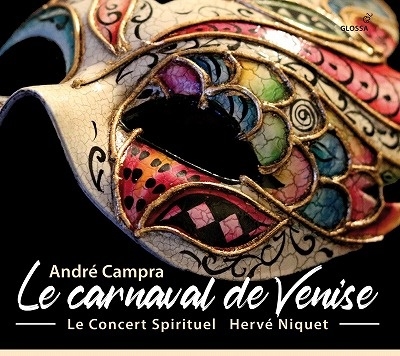
エルヴェ・ニケの名盤が復刻! カンプラ:オペラ・バレ 《ヴェニスの謝肉祭》!
鬼才エルヴェ・ニケ&コンセール・スピリチュエルが歩む知られざるフランス・バロック音楽の復興、復権の旅路!
傑作「レクイエム」などの優れた宗教音楽の作曲家であると同時に、舞台音楽に魅了されたノートルダム大聖堂の楽長、アンドレ・カンプラ(1660-1744)のオペラ・バレ「ヴェニスの謝肉祭」が再登場!
フランス・バロックの新しい舞台音楽のスタイル"オペラ・バレ"を確立、発展させるという大仕事を実現させたカンプラ。
聖職者、舞台音楽作曲家の両立が許されず、大聖堂の楽長を解任されてしまうカンプラでしたが、18世紀の到来を目前に控えた1699年にパリで完成した「ヴェニスの謝肉祭」は、大成功を収めた「優雅なヨーロッパ」と並ぶカンプラの舞台音楽の代表作に位置付けられています。
カンプラの"宗教音楽"の演奏、解釈にも定評のあるエルヴェ・ニケとコンセール・スピリチュエル。英BBCミュージック・マガジンは「エルヴェ・ニケは、カンプラのスコアを理解した素晴らしいアンサンブルを指揮します。歌手陣は表現力に富み、サロメ・アレールのイザベルは壮大で、アンドルー・フォスター=ウィリアムズのロドルフは説得力に満ちています」と高い評価を与えているのをはじめとして、英グラモフォン紙(Gramophone Magazine)、英ファイナンシャル・タイムズ紙(Financial Times)などでも話題となりました。
東京エムプラス
発売・販売元 提供資料(2021/12/22)
Andre Campra has the distinction of being the most prominent French opera composer in the decades between Lully and Rameau, but even the operas of those two great masters are so rarely performed or recorded that it's not surprising that Campra's are virtually unknown to modern audiences. That makes this very fine recording with Herve Niquet leading Choeur et Orchestre du Concert Spirituel and Les Chantres du Centre de musique baroque de Versailles all the more valuable and welcome to fans of the French Baroque. Campra enthusiastically embraced the innovations of Italian opera, particularly the da capo aria, that Lully had scorned. The plot of Le Carneval de Venise (obviously) even takes place in Italy in an opera theater preparing a performance, and it involves an opera within an opera; it concludes with a performance of an operatic divertissement in Italian, Orfeo nell'inferi, in which Campra unabashedly adopts Italian conventions. The French sections are similar in sound and style to Lully's operas-ballets even though Campra doesn't have Lully's genius for simple, memorable melody. Orfeo nell'inferi very skillfully uses the florid manner of late 17th century opera, and the juxtaposition of the two styles, while intriguing to modern ears, must have been absolutely revolutionary to French audiences who were finally exposed to the innovations of Italian opera. The singers, chorus, and orchestra are skilled in both the Italian and French conventions of Middle Baroque performance practice and they offer a compelling account of the piece. The orchestra and the chorus (which is used very prominently in the French sections) play and sing with precision and lively energy. Niquet's tempos are fluid and he maintains a strong sense of momentum throughout. The soloists are never less than adequate and several stand out, particularly sopranos Salome Haller and Sarah Tynan, tenor Mathias Vidal, baritone Andrew Foster-Williams, and bass Luigi de Donato. Glossa's sound is characteristically immaculate present and beautifully balanced.
Rovi