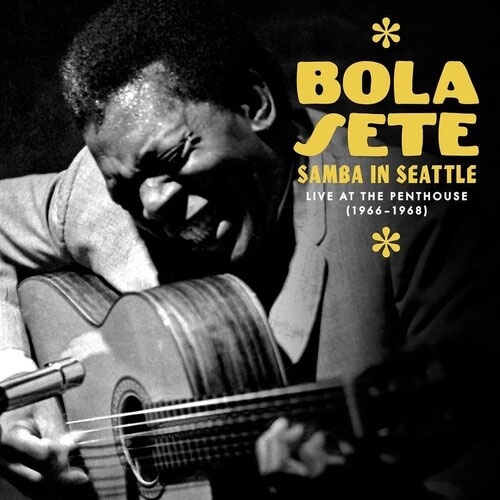
Brazilian guitarist Bola Sete is an icon among musicians, and many jazz and Brazilian music fans. In 1959, after establishing himself with six albums, Sete emigrated to the U.S. playing Sheraton lounges across the country. He joined Dizzy Gillespies band in San Francisco, then worked with Vince Guaraldi, and finally established himself as a solo act and bandleader, evidenced beautifully on 1966s Bola Sete at the Monterey Jazz Festival. Setes canny approach seamlessly weds classical and Brazilian folk traditions with modern jazz, Latin grooves, emerging MPB, Anglo pop, and swinging improvisation. Later offerings such as 1975s Ocean (later Ocean Memories under Setes given name Djalma De Andrade) and 1985s Jungle Suite -- as well as posthumous releases on widow Anne Setes Samba Moon label -- offer a more experimental, but arguably more innovative aesthetic.
This three-disc box set on Tompkins Square was produced by Resonance Records Zev Feldman. He secured these previously unissued, beautifully recorded tapes from the famed Penthouse archive. Across the three annual performances, the trio remains the same: Sete on guitars with bassist Sebastiao Neto and drummer Paulinho Magalhaes. The material reflects engaging set lists filled with bossa and samba hits, classical pieces, and some jazz and pop tunes -- some played solo. (There are few duplicates.) Disc one offers a smoking version of Baden Powells "Consolação," where all the trios strengths are on display. The swinging interplay cuts across samba, blues, and hard bop. After two Bach pieces, Sete delivers his immortal original "Soul Samba." The fluidity of his playing prompts the percussionist to double time as Neto extrapolates on the changes. Disc one closes with a dazzling solo rendition of Ernesto Lecuonas iconic "Malaguena." Disc two, from 1967, is entirely different. Setes reading of Johnny Mandels "The Shadow of Your Smile" showcases spectacular melodic improvisation. He follows with a nearly danceable bossa take on Duke Ellingtons "Satin Doll." The solo approach to Luiz Bonfas "Manha de Carnaval," reveals its roots in afoxe and classical music and swings. The middle section is filled with Brazilian jams including Tom Jobims "Samba De Orfeu" and Marcos Valles "Samba de Verao" before closing with dazzling improvisations on classical and flamenco tunes. The 1968 concert commences with the trio blazing through Haroldo Lobos "Tristeza" before Sete renders a tender version of Jobims "Corcovado." Powells classic samba "Deve Ser Amor" and dark "Consolação" are played with fiery intensity. Roberto Menescals "O Barquinho" is rendered with warmth and humor while Jobims "One Note Samba," grooves its way into a breezy "Satin Doll."
Samba in Seattle offers stellar sound quality. Its booklet contains rare photos from Annes collection, Feldmans interviews with her and Carlos Santana (caretaker of Setes guitars), and essays and reflections by historian Greg Casseus, musicians George Winston and Lalo Schifrin, and a reprint of John Faheys 1976 essay for Guitar Player. Sete was a groundbreaking guitarist; his music is deserving of far wider study and recognition. This fantastic box offers plenty of evidence for wider reconsideration. ~ Thom Jurek
Rovi