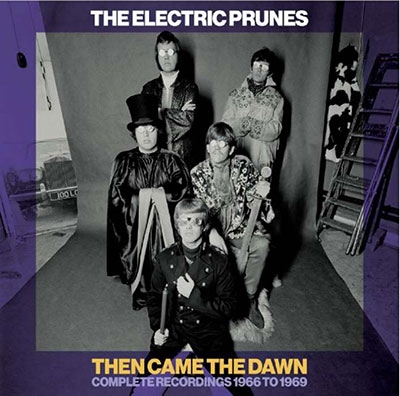
Few successful bands received stranger treatment at the hands of their handlers than the Electric Prunes. The glorious skittery noise that heralded the beginning of "I Had Too Much to Dream (Last Night)" was one of the truly great moments of the garage-psych era, but on their third and fourth albums, the Prunes were essentially locked out of the creation of two albums that bore their name -- the pretentious but not uninteresting Mass in F Minor and Release of an Oath -- both released in 1968 and both composed and arranged by David Axelrod -- and the fifth Electric Prunes LP, 1969s Just Good Old Rock and Roll, was not only cut by a band that had been hired to replace them on the road, but didnt even follow their trademark sound. One can only wonder how much worse things could have been for them if they hadnt scored two major hit singles. Despite it all, there were plenty of great moments in the Electric Prunes body of work in their initial run from 1965 to 1970, and all of them can be found on Then Came the Dawn: The Complete Recordings 1966-1969, an exhaustive six-disc set that contains all the album and single sides they recorded for Reprise Records, as well as some rare live recordings and previously unheard early demo tracks. The effort to document all sides of their recorded legacy has an odd effect when you plow through this box in full. Folks who love the garage rock sneer and heady mix of fuzz and reverb that fuel 1967s I Had Too Much to Dream (Last Night) and Underground might not be so keen on the atmospheric orchestrations of Mass in F Minor and Release of an Oath; the David Axelrod fans who appreciate the arty constructs of his arrangements are less likely to dig the ripping garage rock of the first two LPs, and in all likelihood, none of them want to hear the misbegotten hard rock and boogie excesses of Just Good Old Rock and Roll. At the same time, its difficult not to admire the thoroughness of this collection, which tacks on a number of goodies of greatest interest to the garage-psych obsessives in their fan base. Disc five is devoted to non-LP single sides, alternate mixes, a tune that previously only appeared on a rare promo 45 ("Shadows," which the Prunes recorded for the 1968 movie The Name of the Game Is Kill), and their famous radio spot hawking Vox Wah-Wah pedals. Disc six closes the program with Stockholm 67, a blazing live show recorded for Swedish radio, and an early demo from the days when they were still called Jim and the Lords. The audio is splendid throughout, and the liner notes by Gray Newell tell the whole convoluted tale in rich detail. Regardless of what you love about the Electric Prunes, youll find it on Then Came the Dawn -- its the last word on their first era. ~ Mark Deming
Rovi