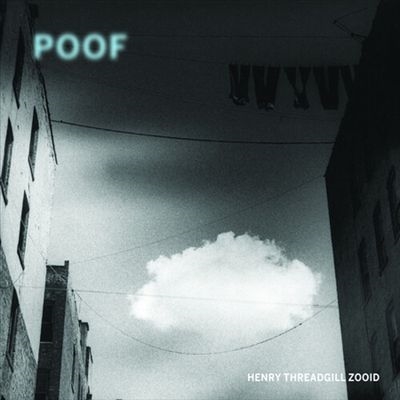
Poof marks both the 20th anniversary of Henry Threadgills Zooid (his longest-running band) and the first time theyve issued a recording since 2015s In for a Penny, In for a Pound. The personnel remain guitarist Liberty Ellman, tubist/trombonist Jose Davila, cellist Christopher Hoffman, and drummer Elliot Humberto Kavee. Each contributes an abundance of rhythmic sophistication, innovative lyricism, and canny improvisational chops to the party. Threadgill composed each of these five pieces as mini-concertos for different combinations of instruments, although the groups canny improv interplay is constant.
Opener Come and Go commences with rumbling snare, whispering cymbals, and plucked guitar, framing the middle of a cello solo. Hoffman actually sets out the tunes path of intervallic inquiry. First Davilas tuba, then Threadgills alto, and finally Ellmans electric guitar begin circling him atop Kavees angular, dancing drumkit. Only then does Hoffman begin a solo that morphs into an extended dialogue with tuba and guitar. The title tune commences with a dialogue between guitar, tuba, trombone, and cello. Drums signify each pass of the melody. Threadgills raw-toned alto lays out a sweet, reflective, bluesy melody. Each player solos beautifully after him while retaining the languid tempo. Beneath the Bottom offers a swinging, post-bop rhythm before the trombone emerges in an unaccompanied solo. Threadgills flutes join Ellmans sparse single-string markers as Kavee shimmers with mallets across his cymbals. The trombone re-emerges with a mute, and the band follows it down a rabbit hole of knotty classical harmonies before returning to swing with deep blues grooves. While Happenstance spends the majority of its eight minutes exploring minimal tonal, textural, and timbral conversations, there are some explosive moments for Kavee, who delivers a killer three-minute solo initiating the bands stop-and-start pulse-like dialogue. Closer Now and Then features the lively ensemble using moderate dynamics and the detail and transparency of a chamber group. Twinned lyric lines by Ellman and Davila provide a roadmap as Hoffmans cello and Kavees rim shots punctuate and expand the groove. Threadgills alto doesnt enter until the final minute to provide a lively dialogue with guitar and tuba resulting in a surprising multiphonic conclusion.
As is typical of Zooids music, Threadgill allows humor, instinct, and innovation room to speak in his compositions. Its obvious from the groups adventurous interaction, he understands exactly how to write for each of its players as well as to their strengths as an ensemble. Poof is a fine snapshot of Zooid at this point in its history, and of Threadgill, too, whose twin senses of creative ambition and aesthetic taste continue to question the foundations of harmony, rhythm, space, and tonality in the 2st century. ~ Thom Jurek
Rovi