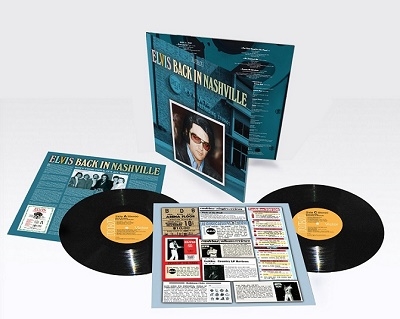
エルヴィス・プレスリー最後のナッシュヴィル・セッション50周年を記念した決定版『エルヴィス・バック・イン・ナッシュヴィル』 (LP2枚組アナログ盤)
『エルヴィス・バック・イン・ナッシュヴィル』にはエルヴィスとミュージシャンがスタジオ内で生演奏しながら、のちに発売するための主要楽曲やパフォーマンスを録音している姿をとらえた82曲のオリジナル録音が手付かずの状態で収録されている。これらの貴重なセッションは、エルヴィス最後のナッシュヴィル録音を時系列でとらえている。1971年のナッシュヴィルにおけるスタジオ録音の一部は、オーケストラやヴォーカルのオーヴァーダブを施したものが季節商品の『初めてのクリスマス(Elvis Sings the Wonderful World of Christmas)』(1971年)、グラミー賞を受賞したゴスペル・アルバム『至上の愛(He Touched Me)』(1972年)、『エルヴィス・ナウ』(1972年)、『フール(Elvis)』(1973年)に収録された。
前作『フロム・エルヴィス・イン・ナッシュヴィル』(2020年11月発売)と同様、『エルヴィス・バック・イン・ナッシュヴィル』はエルヴィス・プレスリーと彼のメインのバンドの、実際のセッションそのままの姿をとらえており、オーケストラのオーヴァーダブやヴォーカルは伴っていない。エルヴィスが1970年と1971年にナッシュヴィルで行ったセッションの主な違いは、1971年の録音にはバッキング・シンガーの声が入っているものが多いということ。したがって『エルヴィス・バック・イン・ナッシュヴィル』にはヴォーカルが増強されているものといないもの両方の楽曲が多種多様収録されることになる。
エルヴィスとミュージシャンたちが伝説的な1970年のマラソン・セッションで生み出した多数の素晴らしい録音は『フロム・エルヴィス・イン・ナッシュヴィル』で聴くことができるが、RCAとエルヴィスのスタッフは今回もタイトなバンド、年季の入ったスタジオ、慎重に選ばれたレパートリー、マイクを前にリラックスした自然体のエルヴィスという魅力的なコンビネーションを維持し、短い期間にできるだけ多くの音源を録音することにした。これらのセッションは、エルヴィスのその後のコンサート日程が増えていく中、この先スタジオで過ごせる時間が限られることを見越し、1年分くらいの新曲を生み出すというのが目標だった。RCAとトム・パーカー大佐は、新たなクリスマス・アルバム、ゴスペル・アルバム、ポップ・アルバムに加え「夏と秋にリリースするためのニュー・シングルを数曲」欲しいとエルヴィスに伝えた。それに従い、エルヴィスの音楽コーディネーター兼プロデューサーのフェルトン・ジャーヴィスが、1971年3月15日からまる1週間分昼夜にわたるセッションを予約し、前年に起用したのと同じメンバーのバンドを連れてきた。(1/2)
発売・販売元 提供資料(2021/08/20)
エルヴィスが1970年にナッシュヴィルにレコーディングの為に戻ったことは貴重だった。メンフィス録音やステージへの復帰の直後に行われたこれらのセッションは、単にカムバックを維持させる以上の効果があった。これらのセッションによりエルヴィスは素晴らしい新リズム・セクションを知ることとなり、エルヴィスは素晴らしくかつ新しいサウンドを与えられたのだ。ベーシストのノーバート・パットナム、ドラマーのジェリー・キャリガン、ピアニストのデヴィッド・ブリッグスは60年代に、R&Bに影響を受けたスタイルをアラバマ州マッスルショールズのF.A.M.E.スタジオからナッシュヴィルでのセッション・ワークに移植し、カントリー・ミュージックのリズムの変化に寄与していた。プロデューサーのフェルトン・ジャーヴィスのもと引き合わされたエルヴィス、マッスルショールズの青年たち、セッションギタリストのチップ・ヤング、あらゆる音楽をこなすチャーリー・マッコイ、そしてエルヴィスのバンドのリーダー、ジェームス・バートンは、後年に評価を得ることとなる『エルヴィス・カントリー』を共に作り出した。そのプロセスの中で得たカントリー・ソウルのテンプレートを、エルヴィスは晩年たびたび踏襲することになる。
音楽評論家のデイヴ・マーシュはかつて、あの称賛をもってしても「エルヴィス・プレスリーはおそらく史上最も過小評価されたシンガーの1人だった」と記したことがある。オーヴァーダブを廃した『エルヴィス・バック・イン・ナッシュヴィル』は、エルヴィスのキャリアの中でも有数の説得力の強さを持った歌声を露わにする。
本作『エルヴィス・バック・イン・ナッシュヴィル』LP2枚組アナログ盤には、4枚組CD(82曲)より抜粋された、全21曲が収録される。(2/2)
発売・販売元 提供資料(2021/08/20)
A companion to From Elvis in Nashville, a 2020 boxed set that concentrated on the June 1970 sessions that produced Thats the Way It Is and Elvis Country (Im 10,000 Years Old), Elvis Back in Nashville dives into Elvis Presleys final recordings from Nashville, sessions that largely occurred between May and June, 1971. The recordings here are presented sans overdubs -- backing vocals by the Imperials often remain -- so the focus is on the chemistry between Presley and the crack studio band assembled by producer Felton Jarvis. Its the same aesthetic behind From Elvis in Nashville, but where that box captured a focused Presley working with ace contemporary material, the Elvis on Elvis Back in Nashville struggles with his repertoire and his health as he attempts to cut a collection of folky numbers, a second Christmas album, and a gospel record. After an initial March session was plagued by a sniffly Elvis -- he was hospitalized for glaucoma not long afterward -- the folk LP quickly fell by the wayside, leaving the holiday and gospel albums as priorities. Sometimes Presley would sneak in a cover of an oldie or recent hit as a way to blow off steam at the end of the night, but the commercial mission of these sessions means Elvis Back in Nashville is dominated by gospel and Christmas music. Collectively, the religious and holiday sides make up for two of the boxs four discs -- the masters are on the second, the outtakes on the fourth -- while the first disc has many of the finished secular sides (theyd wind up as singles or on Elvis Now and Elvis AKA Fool, released in 1972 and 1973, respectively) and the third rounds up outtakes (including previously released outtakes). Perhaps this may be a bit too much gospel and holiday music for some tastes, but Presley is as masterful on these sides as he is on the pop and country-folk numbers. Hes a little older and a little slower, but he bears his scars with pride and knows when to unleash his might at the right moment. All this means Elvis Back in Nashville adds up to an effective, sometimes moving, portrait of a lion in middle age. ~ Stephen Thomas Erlewine
Rovi