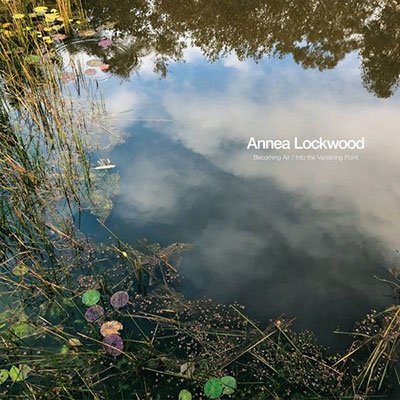
Annea Lockwood is underrated as a force in avant-garde music, combining electronics and found sounds with an environmental bent at a time when few composers, and perhaps no women, were doing such things. She has remained active into old age, and her language has continued to develop; both works on this Black Truffle release are new and contain new ideas. Lockwoods interest in environmental sounds has progressed to environmental activism. Into the Vanishing Point addresses the global crash in insect populations. The subject is clear if the listener is prepared with background (which must be sought out), but perhaps less so if one encounters the work cold. Less elusive is Becoming Air, which Lockwood developed together with the trumpeter here, Nate Wooley. In this work, Lockwood uses electronics to destabilize Wooleys control over his instrument, making pitch fluctuate and timbre wobble and forcing the trumpet into high notes where it is extremely uncomfortable. The idea is abstract, but the work is quite evocative of questions regarding the relationship between acoustic and electronic instruments and between human agency and the technological world more generally. Beyond all this, Lockwood shows that the experimental spirit of musical electronics in the 1960s and 1970s is alive and well in the ongoing work of this remarkable figure. ~ James Manheim
Rovi
Annea Lockwood is underrated as a force in avant-garde music, combining electronics and found sounds with an environmental bent at a time when few composers, and perhaps no women, were doing such things. She has remained active into old age, and her language has continued to develop; both works on this Black Truffle release are new and contain new ideas. Lockwoods interest in environmental sounds has progressed to environmental activism. Into the Vanishing Point addresses the global crash in insect populations. The subject is clear if the listener is prepared with background (which must be sought out), but perhaps less so if one encounters the work cold. Less elusive is Becoming Air, which Lockwood developed together with the trumpeter here, Nate Wooley. In this work, Lockwood uses electronics to destabilize Wooleys control over his instrument, making pitch fluctuate and timbre wobble and forcing the trumpet into high notes where it is extremely uncomfortable. The idea is abstract, but the work is quite evocative of questions regarding the relationship between acoustic and electronic instruments and between human agency and the technological world more generally. Beyond all this, Lockwood shows that the experimental spirit of musical electronics in the 1960s and 1970s is alive and well in the ongoing work of this remarkable figure.
Rovi