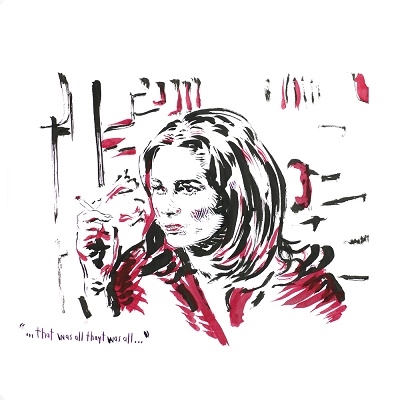
Music was always a small but significant part of Karen Blacks career, whether she was one of the leading actors in the New Hollywood scene of the 1970s or a cult icon of horror and B-movies in the 90s and 2000s. She sang in several of her films, most notably Robert Altmans 1975 classic Nashville, where she performed songs she wrote herself. Around that time, Black also appeared on variety shows hosted by Bobby Vinton and Dolly Parton, singing her own material; decades later, she performed with L7 and collaborated with Cass McCombs. However, Black also recorded her music, and at the peak of her mainstream popularity, she headed into the studio with producers including Bones Howe and Elliot Mazer. It wasnt until after her 2013 death that these sessions were discovered by her fourth husband, Stephen Eckelberry, and eventually compiled by McCombs as Dreaming of You (1971-1976). Its a striking collection that builds on the reputation of her previous performances and offers plenty of surprises along the way.
Black is an intuitive singer/songwriter with a knack for colorful detail and a flair for intimate performances. Both are immediately apparent on the wide-eyed opening track Sunshine of Our Days as well as Youre Not in My Plans, which is steeped in a weariness both down-to-earth and haunting. The spookier, sorrowful side of folk is one of Blacks specialties, whether on the fairy tale-gone-wrong It All Turned Out the Way I Planned It or Thats Me, where she expresses ghostly remembrances in a dreamy and pure soprano. Blacks performances as a singer are as nuanced as her acting, spanning the lilting sweetness of Dreaming of You, the gorgeous high notes of The Wind Doesnt Speak to Me Anymore, and the throaty heartache of Well I Know Youre Lonely Now. And just as her roles had range, so do Dreaming of Yous songs. One of the few tracks with a full band, Babe Oh Babe, could pass for a forgotten folk-pop hit from the era; If I Thought Youd Ever Change Your Mind is a lavish exercise in chamber folk; and Thank God Youre Mine recalls her Nashville songs with its piano and pedal steel. Dreaming of Yous simple instrumentation -- which frequently amounts to a lone acoustic guitar -- helps Black traverse many sounds and moods, and lends a timelessness to songs such as her version of the Moody Blues Question, one of the collections most beautiful moments. Its a testament to her gifts as a writer and performer that the additions McCombs makes to some of her songs, like the pedal steel and tumbling drums on the heartbreaking I Wish I Knew the Man I Thought You Were, arent entirely necessary. Though its a shame Black didnt find time to record and release more of her music, Dreaming of You (1971-1976) rivals any private press discoveries when it comes to authenticity, originality, and beauty. ~ Heather Phares
Rovi