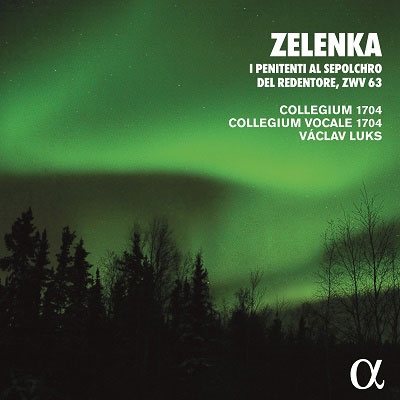
ゼレンカ後年の声楽作法と劇的音楽感覚が映える重要作
ドレスデン宮廷にコントラバス奏者として、また作曲家として仕えたチェコ出身のゼレンカの音楽は、とくに教会音楽の分野で近隣のバッハにも比しうる、あるいは「それ以上」とさえ絶賛されるほどで、どの録音も聴き逃せません。こちらは、ポーランド王位を継承するためカトリックに改宗したドレスデン宮廷にあっても、故郷オーストリアでの宗派の礼拝習慣に従っていたザクセン選帝侯妃マリア・ヨゼファのためのセレナータ風の受難週音楽。同じ宮廷にいたハッセが使いこなしたイタリア・オペラの語法ともやや異なる、ゼレンカならではの迫真の表現力に満ちた音使いが聴かれ、作曲家後年の充実した作風をじっくり味わうことができます。チェコSupraphonレーベルでも録音をリリースしてきたヴァーツラフ・ルクス率いるコレギウム1704は、フランスやベルギーなどの古楽先進国でも高い評価を博してきた俊英集団。1730年代の後期バロックの充実を、古楽復興の進んだヨーロッパならではの「発見の面白さ」とともに感じられる1枚です。
ナクソス・ジャパン
発売・販売元 提供資料(2021/05/20)
Bohemian composer Jan Dismas Zelenka is a strong candidate for the greatest rediscovery of the Baroque revival. He worked for most of his career in Dresden (the booklet, in French and English, goes into a great deal of detail about the political determinants and musical implications of this fact), and Bach, who didn't admire many composers, admired him. Each new Zelenka work that emerges, if competently performed, seems to astonish, and I Penitenti al Sepolchro del Redentore, ZWV 63 (The Penitents at the Sepulchre of the Redeemer), composed late in Zelenka's career in 1736, is no exception. The work is a bit hard to get a grip on because of its odd genre. Annotator Vaclav Luks calls it a "sepolcro oratorio": it is a little religious semi-drama based on the idea that biblical figures, who may not (as in this case) actually meet in the Bible at all, gather at Christ's tomb and contemplate his divine mysteries. The benefit of this rather artificial device is that biblical stories can be massaged into quasi-operatic sentiments. The libretto of this roughly hour-long Italian-language work, by the Padua-to-Dresden transplant Stefano Benedetto Pallavicino, features arias by the unlikely trio of King David (Davidde), Mary Magdalene (Maddalena), and St. Peter (Pietro). For the most part they wouldn't have been out of place in an opera by Hasse, Zelenka's rival at the Dresden court; sample Peter's "Lingua perfidia" (Perfidious Tongue, referring to the snake in the garden of Eden), track 7, for an idea of how closely Zelenka's melodic writing approximated the high and then quite new opera seria style of the middle eighteenth century: it is flashy, passionate, and both vocally and instrumentally fancy stuff. The three vocal soloists on this Czech release all acquit themselves well, but the real shocks that make Zelenka so much fun come in the instrumental parts, vigorously and accurately rendered by the historical-instrument ensemble Collegium 1704. The use of pizzicato to depict the words "Le tue corde, arpe sonora" (Your strings, sonorous harp, track 11) is something another composer might have thought of, but the massive extension of the pizzicato passage is pure Zelenka. There are lots of other surprises in the instrumental writing, and the whole work is entirely worthy of this fascinating composer. The sound recording, from a Prague castle, is superb. This Czech ensemble is to be commended for its effective championing of music from its home ground.
Rovi