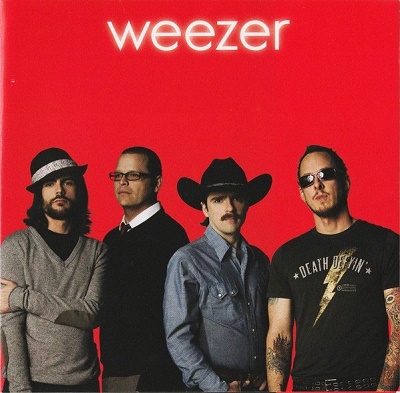
An old critical cliche is that eponymous albums are statements of purpose, so what to make of Weezer and their third color-coded self-titled album? Well, the band proves that axiom true, as every one of these eponymous efforts functions as an act of introduction, from their 1994 Blue debut to their 2001 Green comeback to 2008's Red Album, where Rivers Cuomo turns many of the group's long-standing rules upside down. This isn't a radical sonic makeover -- ever a pop formalist, Rivers has Weezer stick to their signatures of big guitars and bigger hooks -- but rather a question of attitude, as Cuomo loosens up as he stares down his impending middle age, choosing to get silly rather than serious. He tears down his self-imposed three-minute barriers, writing two long-form suites (and another track that clocks in over five minutes), he sneers at Timbaland's hitmaking prowess in "Pork and Beans," he never avoids his age, whether he's making asides to Rogaine or indulging in warm nostalgia in the pseudo-"In the Garage" sequel "Heart Songs" and, most importantly, he steals a page from the Noel Gallagher playbook and deliberately shares the spotlight with his bandmates. Not for nothing does Weezer cover "The Weight" as a bonus track on one of the international editions of the Red Album -- nowadays, everybody in Weezer gets a chance to sing lead, just like the Band did way back when. Bassist Scott Shriner is given Cuomo's mildly creepy original "Cold Dark World" to sing, but longtime fellow travelers, guitarist Brian Bell and drummer Pat Wilson, write and sing their own tunes ("Thought I Knew" and "Automatic," respectively), turning in sweet pop tunes that complement Cuomo's style even if they help give the Red Album a bit of a ragged edge, especially when compared to the brutal efficiency of Maladroit and the oversized, highly buffed Make Believe. Of course, the very point of the Red Album is for Weezer to not take things so seriously, to reconnect to their beginnings while taking the advantage of their rock star status to act seriously goofy. This freedom is entirely within the mind -- musically, this is all easily identifiable as Weezer -- but it invigorates such seemingly by the books rockers as "Troublemaker," where the loopy lyrics are as prominent and irresistible as the hooks. As the album opener, it sets the stage for a cheerfully restless record, one where all the parts don't fit and it's better because of it, as it has a wild, willing personality, suggesting that Weezer is comfortable as a band in a way they never quite have been before. Given that feeling, it makes perfect sense that the Red Album is another self-titled record, as it plays like an opening to a new chapter instead of merely more of the same. ~ Stephen Thomas Erlewine
Rovi
フロントマンのリヴァース・クオモに関しては、ファースト・ソロ・アルバムの発表や結婚、子供の誕生といった嬉しい話題が続いたが、バンド自体は解散説が流れるなど決して順風満帆とはいかなかった。ゆえにこの〈赤盤〉は待望の新作と言えるだろう。前作に続いてリック・ルービンをプロデューサーに迎えた内容は、原点回帰ともいえるお得意の陽気なパワー・ポップや号泣バラードはもちろんのこと、木洩れ日フォーク、プログレッシヴな長尺ナンバーといった新たな引き出しも存分に披露した野心的なもの。それでも結局のところ、どこを切ってもウィーザー以外の何モノでもないという仕上がりだけに、1作目の〈青盤〉、3作目の〈緑盤〉に匹敵する名盤として本作が語り継がれることは間違いないだろう。
bounce (C)渡辺 貴仁
タワーレコード(2008年07月号掲載 (P100))
まさに売れればそれでいいという