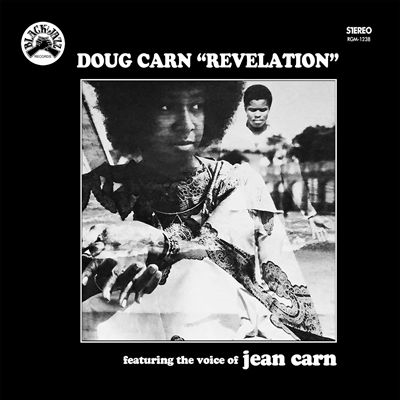
Doug and Jean Carns 1973 album Revelation was their final Black Jazz collaboration. Its seamless integration of modal jazz, funk, and spiritual soul in Dougs expansive compositions and Jeans iconic singing register far beyond the boundaries of genre purity. The lineup includes trumpeter Olu Dara, saxophonist Rene McClean, bassist Walter Booker, bass trumpeter Earl McIntyre, guitarist Nathan Page, and drummer Buddy Williams.
Opener God Is One is a brief yet glorious benediction. Its modal vamp and chant were inspired by John Coltranes A Love Supreme. Pages soloing on the edges adds textural support to bridge Jeans singing with the bands spirited Eastern groove. Power and the Glory is among the finest tunes in Black Jazzs catalog. A punchy Rhodes piano moves across droning chord progressions as Pages Wes Montgomery-esque tone offers snaky improvisation while simultaneously engaging in syncopated interplay with the rhythm section. Jean soars above, framed by tonally contrasting horn-section accents. Dougs harmonic approach on B-3 and Rhodes juxtaposes soul, gospel, and modal jazz, adding a funky dimension for Jean to play off. Horns introduce the soulful Revelation; Dara and McClean sing call-and-response harmony (Philly soul style) underneath Jeans flowing, gospelized soul as Rhodes, bass, and snare breaks bubble underneath. A lilting reading of Coltranes Naima features Jeans overdubbed vocals engaging in harmony with one another. McCoy Tyners Contemplation weds modal jazz, gospel and blues as Jean swoops, growls, and declares the lyric, exhorting the listener toward inner exploration. Fatherhood is a hard-grooving soul-jazz jam. Dougs organ dialogues with Page as the rhythm section comp and wind around them. Feel Free is the sets longest track. A Rhodes introduces the modal theme before Jeans resonant vocal floats soulfully around Dougs upper-register melodic fills that contemplatively frame the space behind her. Pages slow, angular solo crisscrosses post-bop, R&B, and the blues with fleet yet knotty arpeggios. Daras loping solo guides the rhythm section as breaking snares, hi-hat cymbals, and syncopated tom-toms shift tempos before Jean winds it all down. Time Is Running Out is an urgent meld of hard bop and soul. Jean warns about the wages of institutional racism in a throaty contralto as Doug adds spiky synth lines and a snarling organ solo to the driving tempo. McCleans massively funky Jihad closes the set. His harmonic palette grafts angular Eastern modalism onto finger-popping post-bop and pulsing progressive funk (think Stevie Wonders Higher Ground). Bookers bassline drives singer and horns, adding woody accents to each line as Doug, Page, and Williams pulse aggressively underneath. The composers sax solo lands somewhere between Coltranes outward expansions and Stanley Turrentines seismic soul. While their two earlier recordings, Infant Eyes and Spirit of the New Land, were among Black Jazzs best-sellers, Revelation is arguably the strongest of the three. It showcases the full blossoming of the duos explorations and integrations from previous outings, and stands as one of the labels true classics. ~ Thom Jurek
Rovi