心に染みわたる物悲しくも美しい旋律。
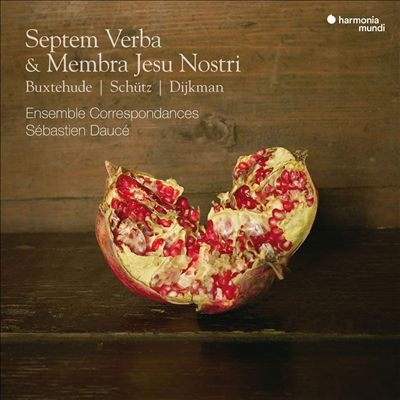
アンサンブル・コレスポンダンスがブクステフーデ、シュッツ、ディークマンの宗教音楽を録音!
鍵盤奏者、指揮者のセバスティアン・ドセのもとに2008年にリヨンで創設されたアンサンブル・コレスポンダンス。17世紀のフランス宗教音楽を中心レパートリーとし、著名な作曲家の作品を再発見するなど、その精力的な演奏・録音活動で定評のあるアンサンブルとしてフランスの古楽界を牽引する存在となっております。
『七つの言葉とイエスの四肢』と題された当アルバムではJ.S.バッハ以前のヨーロッパにおけるルター派の宗教音楽発展に寄与したブクステフーデ、シュッツ、ディークマンの作品を収録しております。
1645年頃にスウェーデンのヘデモラで生まれ、1717年にストックホルムで亡くなったオルガニスト、作曲家のリューデット・ディークマンはスウェーデンの各地で活躍しました。ディークマン唯一の現存の作品、葬送音楽「嘆きの歌(悲歌)」はスウェーデンの二人の王子グスタフ(1683-85)とウルリク(1684-85)の死を悼むもので、1685年4月にその短い生涯をとじた二人の王子の葬儀の際に作曲されました。悲しくも実に心温まる旋律が印象的なディークマンの作品は、同時代のシャルパンティエを思わせる響きを思わせます。
ソリストとしても活躍する精鋭が揃った当アンサンブルの演奏・歌唱は極上の一言。嘆きの歌をはじめ、聴き手の心に染みわたる録音です。
キングインターナショナル
発売・販売元 提供資料(2021/02/10)
As annotator Peter Wollny points out here, German vocal music of the later 17th century is still a rare find on concert programs, although the marquee attraction of this release by Ensemble Correspondances and director Sebastien Dauce, the set of linked cantatas called Membra Jesu Nostri, BuxWV 75, of Dietrich Buxtehude, has been recorded several times. Membra Jesu Nostri means body parts of our Jesus, and its a fascinating work, inward and contemplative, that depicts the rising gaze of the worshipper facing the crucified Christ. Each of the seven cantata texts is framed by a relevant biblical passage, set for the chorus and full ensemble, while the new devotional poem is in the middle, sung by a soloist and accompanied by organ continuo, and in a slightly faster tempo. Dauce here uses an ideally sized chorus of ten; this is undoubtedly chamber music in the original sense of the term, but to merely break the soloists out of a solo group loses important structural contrasts. The second part of the program includes the comparatively rare Da Jesus an dem Kreuze stund, SWV 478, of Schutz, a chorale-based Seven Last Words of Christ piece, as well as memorial pieces by Buxtehude and Ludert Dijkman, the latter in Swedish, and a complex, Bachian chorale cantata of Buxtehude to close. Theres great sensuous beauty in the performances here, and its an album that may be enjoyed by anyone drawn to devotional church music. Its greatest draw is that it puts the era between Schutz and Bach in an intelligible context. Much German Protestant music before Bach had an intimate, inward tone, partly because big, festive pieces were thought to be too Catholic, and this tone flowed directly into Bach, who did also expand the canvas. Bachs roots are convincingly explored here, and the sound from the Abbaye aux Dames in the old western French town of Saintes is flawless. Dauce and Ensemble Correspondances are best known for recordings of Charpentier and other French Baroque music, but they have scored a major breakthrough here.
Rovi