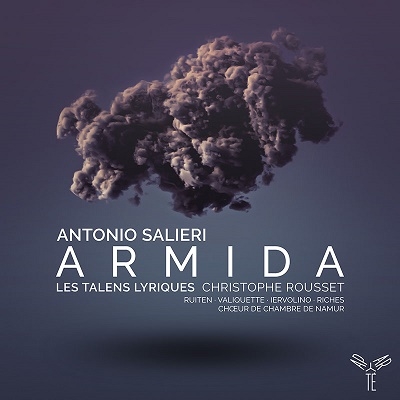
ルセの情熱でサリエリの出世作の魅力が蘇った
サリエリのオペラのリバイバルに情熱を注ぐクリストフ・ルセとレ・タラン・リリクが、また新たな宝を世に出してくれました。20歳のサリエリが手掛け、1771年に発表した最初の本格的オペラ「アルミーダ」。これが認められ名を成していったとされます。序曲やアリアの録音はありましたが、全曲版は世界初となります。
トルクアート・タッソの叙事詩「解放されたエルサレム」に基づきますが、同じ題材で1761年にトラエッタ、1777年にグルック、1817年にロッシーニが名作を残しています。サリエリ版はマルコ・コルテリーニの台本で、キリスト教とイスラム教の東西対立をテーマに、アルミーダ、リナルド、イスメネ、ウバルドの4名が激しいドラマを繰り広げます。サリエリの音楽はイタリアとフランスの様式の完璧な融合が見られるとされ、はつらつとした世界を楽しめます。
主役アルミーダはアメリンクの秘蔵っ子レネケ・ルイテル。正確さに加え華やかな歌唱で近年ひっぱりだこのソプラノです。恋人リナルドはオリジナルだとカストラートが指定されていますが、ここではカナダのソプラノ、フローリー・ヴァリケットが宝塚のような魅力で好演。
ルセのサリエリは「タラール」が、2019年度レコード・アカデミー賞オペラ部門賞を受賞していますが、さらに解釈に深みと自信がみなぎっています。モーツァルトの敵役として才能が劣ると思われがちなサリエリですが、魅力的なメロディときびきびした語り口でその凄さを再認識させられます。
キングインターナショナル
発売・販売元 提供資料(2021/01/19)
Excavations of the operas of Antonio Salieri have revealed many worthwhile works and have often helped reverse the image of the composer as the murderous hack portrayed in the line of dramatic works running from Pushkin (Mozart and Salieri) through to playwright Peter Shaffer and film director Milos Forman. Much more still awaits the adventurous director (did you know that Salieri wrote an opera set in the Caribbean and featuring an interracial marriage, with a text by the librettist of Beethovens Fidelio?). The present work, composed in 1771 when Salieri was just 21 and here receiving its premiere on recordings, is ready for prime time, and its a good deal more progressive than anything Mozart would write for some years. Salieri was a student of Gluck, and Armida, a hit at the time, follows in his footsteps with naturally unfolding action, melodic rather than spectacular arias, individual numbers switching from chorus to recitative to solo melody according to what is going on at the time, and an almost Beethovenian prelude. The chorus, in general, has a lot to do, not just chiming in ceremonially, and the recitatives, both secco (accompanied with a fortepiano, which may have been a stretch for 1771) and accompanied, carry the plot forward. The Romeo-and-Juliet story comes from a poem by Torquato Tasso depicting the titular Arab princess who is supposed to kill the Crusader Rinaldo but falls in love with him instead; operas were based on it by composers running from Monteverdi (whose version is unfortunately lost) to Dvořak and contemporary composer Judith Weir. In fact, Gluck had written his own Armide just four years earlier, and for the student to take on the master on his own turf was a gutsy move; its success indicates its high quality. Conductor Christophe Rousset bulks up his Les Talens Lyriques to 33 players, and the Choeur de Chambre de Namur, with 20 singers, is also just the right size. The cast is not overly prominent but is uniformly strong, led by fine, resolute arias from baritone Ashley Riches as the Crusader Ubaldo. Rinaldo is a soprano role sung by the fast-rising Florie Valiquette. The opera is interesting enough to inspire future productions and recordings, but Roussets, lively and polished, will suffice for any listener getting to know Salieri.
Rovi