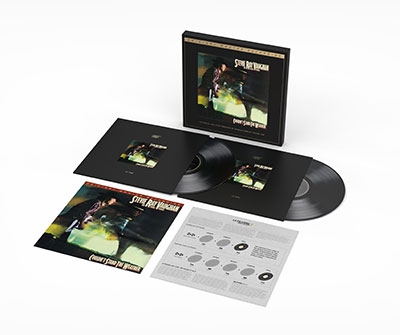
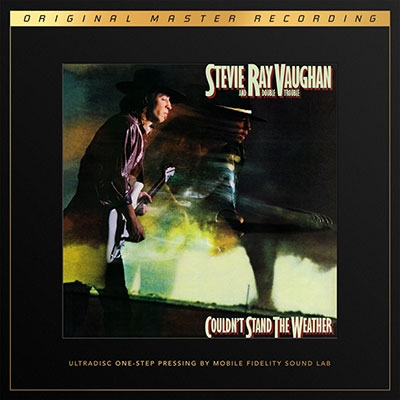
スティーヴィー・レイ・ヴォーン & ダブル・トラブル 1984年発売 『Couldn't Stand the Weather』(邦題:テキサス・ハリケーン)を、モービル・フィデリティ社の究極のアナログ盤規格「ULTRADISC ONE-STEP」×「MoFi SuperVinyl」で復刻。
新たなギター・ヒーロー誕生を告げ、ブルースに再びスポットライトを当てた、衝撃のデビュー作の翌年に発表されたセカンド・アルバム。疾走感満点の「スカッフル・バッティン」から始まり、無駄な装飾のないギターを前面に打ち出した方向性はそのままに、ジミ・ヘンドリックスの代表作「ヴードゥー・チャイル(スライト・リターン)」を取り上げ、兄ジミー・ヴォーンをゲストに迎えるなど、楽曲の幅をさらに広げ、前進する姿を見せた。
◆「ULTRADISC ONE-STEP」(UD1S)シリーズ
独自のテクノロジーとマスタリング技術、そして贅沢な時間を駆使し、マスター・テープのデータを限界まで引き出したハイ・クオリティな復刻盤により世界中のオーディオファンから高い評価を得ているモービル・フィデリティ・サウンド・ラボ社より、究極のアナログ盤規格「ULTRADISCONE-STEP」(UD1S)シリーズが登場。標準的なアナログ盤の生産工程である、ラッカー盤から完成品までの「スリー・ステップ・プロセス」から2工程を省き、あくまで音質を重視した「ワン・ステップ・プロセス」を実現。生産工程で発生するノイズを最小限に抑え、音のディテールの再現性とダイナミクスを大幅に向上させている。「音楽は可能な限り原音に忠実に再現されなければならない。」という、モービル・フィデリティ社設立以来の基本ポリシーを文字通り実現した、究極のアナログ盤規格である。
◆「MoFi SuperVinyl」
MoFi SuperVinylは、アメリカ・カリフォルニア州のNEOTECH社とRTI社の共同開発により新たに生み出された独自のアナログ盤素材。新たに開発されたカーボンレス染料(半透明)により、オリジナルのラッカー盤と区別がつかない、より精密な溝の製造を可能にし、マスタリング・スタジオのサウンドに限りなく近い音質を再現する。
発売・販売元 提供資料(2020/12/18)
Stevie Ray Vaughan's second album, Couldn't Stand the Weather, pretty much did everything a second album should do: it confirmed that the acclaimed debut was no fluke, while matching, if not bettering, the sales of its predecessor, thereby cementing Vaughan's status as a giant of modern blues. So why does it feel like a letdown? Perhaps because it simply offers more of the same, all the while relying heavily on covers. Of the eight songs, half are covers, while two of his four originals are instrumentals -- not necessarily a bad thing, but it gives the impression that Vaughan threw the album together in a rush, even if he didn't. Nevertheless, Couldn't Stand the Weather feels a bit like a holding pattern, since there's no elaboration on Double Trouble's core sound and no great strides forward, whether it's in Vaughan's songwriting or musicianship. Still, as holding patterns go, it's a pretty enjoyable one, since Vaughan and Double Trouble play spiritedly throughout the record. With its swaggering, stuttering riff, the title track ranks as one of Vaughan's classics, and thanks to a nuanced vocal, he makes W.C. Clark's "Cold Shot" his own. The instrumentals -- the breakneck Lonnie Mack-styled "Scuttle Buttin'" and "Stang's Swang," another effective demonstration of Vaughan's jazz inclinations -- work well, even if the original shuffle "Honey Bee" fails to make much of an impression and the cover of "Voodoo Chile (Slight Return)" is too reminiscent of Jimi Hendrix's original. So, there aren't many weaknesses on the record, aside from the suspicion that Vaughan didn't really push himself as hard as he could have, and the feeling that if he had, he would have come up with something a bit stronger. ~ Stephen Thomas Erlewine
Rovi