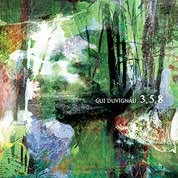
フランス人の両親の元に生まれ,NYを拠点とするベーシスト、Gui Duvignau新作
フランス人の両親の元に生まれ、モロッコ、ブラジルのミナスジェライス州ベロオリゾンテ、サンパウロ等に移り住んだベーシスト、Gui Duvignauの最新作品。10代のころ、兄が、サンパウロのロックやメタルのシーンに魅了されてギターを始めたことに触発され、エレクトリック・ベースを始めたGui。しかし、ロックでは、充分に自分の表現をできないと感じたことから、ジャズに傾倒。マイルス・デイビス、オーネット・コールマン、ジョン・コルトレーン、チャールズ・ミンガス、そしてジャコ・パストリアスといったアーティストの作品を聴いていったほか、カルトーラ、カルロス・ジョビン、シコ・ブアルキ、バーデン・パウエル等、ブラジル音楽にも興味を持ち、音楽的な視野を広げた。
バークリーに進学後、ニューヨークに移住。本作は、3作目の作品。アルゼンチンのピアニストSantiago Leibsonと、Leibsonの紹介の元、縁を結んだベテラン・ドラマー、Jeff Herschfieldとのトリオを中心に、ニューヨークで出会ったサックス奏者Billy Drewes,ドイツ人ギタリストElias Meisterとのクインテット演奏をあわせた演奏。
憧れのポール・モチアンからの影響がみられる浮遊感あふれるオープニング・ナンバー、ブラジル、アルメニアの血を引くパートナーにささげたラヴ・ソングM3.、幼少の時に過ごしたブラジルでの日々をシンコペーションも効果的に使ったその名も"ミナス"と題されたM4、NYのアンダーグラウンド・シーンを思わせるコンテンポラリー・サウンドと楽曲は多種多様。ユニークなコンポジションにも注目のアーティストです。
発売・販売元 提供資料(2020/12/24)
Bassist Gui Duvignau was born in France and grew up in Belo Horizonte, Brazil. He attended the Berklee College of Music in Boston, moved to Portugal, then returned to Paris before coming to New York to get a master’s degree at NYU. Along the way, he recorded 2010s Porto in collaboration with singer and songwriter Sofia Ribeiro, and 2016s Fissura leading a French sextet. 3,5,8, his Sunnyside debut, features the bassist playing nine original compositions accompanied by a cast of New York-based musicians who include Argentine pianist Santiago Leibson, German guitarist Elias Meister, saxophonist Billy Drewes, and star session drummer Jeff Hirschfield.
Opener Volta rumbles into existence with a cascading, circular set of chords from Leibson while Duvignau accents the changes on his folksy melody. Hirschfield doesnt keep time so much as dance with it, a la Paul Motian. His bandmates syncopate the melody, altering cadences and stress points but never resolving the harmony. Drewes and Meister make up the frontline on Yerevan. With Leibson comping the changes, Duvignaus passionate playing bridges the lilting tonal articulation from the guitarist, saxophonist, and rhythm section. Minas is titled after the Brazilian state Minas Gerais, where Duvignaus hometown of Belo Horizonte is located. Meisters gently distorted guitar tones make an utterance before Duvignau punctuates his elongated phrasing. Leibson adds some sparse chords in the upper register as Hirschfield ticks his ride cymbal. Duvignau solos amid the droning exchange, piecing together an elliptical melody along the way. When Leibson begins to articulate it in modal pulses, Drewes, Meister, and Duvignau drive harder, adding heft and ballast that allow Hirschfield to bring it under the umbrella of swing; the group interplay here is striking. Une Pensee Pour Paris is a trio number that begins as a lilting, haunted ballad and evolves first into deep blues, then into impressionist post-bop before returning to whisper its source ballad to a conclusion. Detuned for Drewes is punchy bop for a pianoless trio, with Duvignaus bass twinning lines with the saxophonist as Hirschfield guides the knotty stop-and-start action with dominant swing. Somewhat is introduced by the bassist walking a slow blues amid crash cymbal accents from Hirschfield. Meister picks up on the blues walk with angular lines and distortion as Drewes tracks the ghost of the melody while fully engaging the drummers shuffle. Halfway through, Meister erupts in a razor-wire solo that Duvignau appends by adding a deeper harmonic dimension -- without abandoning the groove. Drewes joins the pair, honking, sputtering, and moaning in a gritty swirl of blues and noir-ish swing. Ultimately, 3,5,8 is a wonderful showcase for Duvignaus writing; his compositions offer kaleidoscopic harmonic and rhythmic vocabularies that reflect many root sources, but he integrates them into a sound completely his own and balances them with his sidemens many strengths. Though Duvignau is not yet a household name among American jazz fans, its only a matter of time before he is. ~ Thom Jurek
Rovi