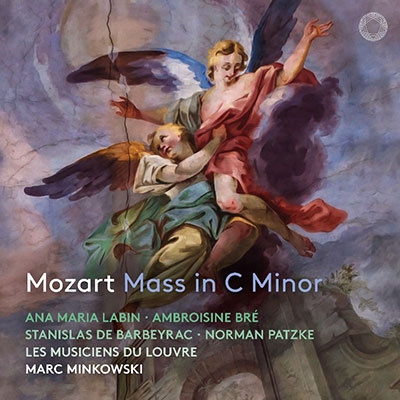
ミンコフスキ、PENTATONEレーベル初登場!
手兵レ・ミュジシャン・デュ・ルーヴル-グルノーブルと
モーツァルトの大ミサ曲をついに録音!!
待ちわびたミンコフスキ率いるレ・ミュジシャン・デュ・ルーヴル-グルノーブル、注目の新譜登場!
2018年12月、本拠地グルノーブルのMC2にてモーツァルトのミサ曲 ハ短調 KV.427をライヴ収録しました。当作品は2013年2月に同団との来日公演でシューベルトの未完成ともに披露され話題となりました。その話題となった作品が今回ついに録音されました!
ミンコフスキとレ・ミュジシャン・デュ・ルーヴル-グルノーブルといえば、ハイドンの交響曲《ロンドン・セット》で2011年度レコード・アカデミー大賞を受賞するなど、これまで同団とともに数々の名演を聴かせてきました。
モーツァルトのミサ曲 ミサ曲 ハ短調 KV.427、通称『大ミサ曲』は、1781年にモーツァルトがウィーンに移り住んでから最初の教会音楽で未完の大作。成立の因はモーツァルトの父の意に染まぬコンスタンツェとの結婚が実現し、彼女を伴ってザルツブルクを訪れることができるならその時は新作を携えていき、故郷の教会に奉献しようという個人的な誓願に発すると考えられています。
ミンコフスキといえば演奏はもちろんのこと、版や編成にも並々ならぬこだわりの持ち主としても知られます。未完の当作品はシュミット版(1901年)、ランドン版(1956年)、モーンダー版(1988年)、バイヤー版(1989年)、レヴィン版(2005年)など様々な補筆版・補完版が存在ますが、ミンコフスキは新モーツァルト全集(Neue Mozart-Ausgabe)に採用されたヘルムート・エーダー版(1985年)で演奏しております。ヘルムート・エーダー(1916-2005)はオーストリアの作曲家。モーツァルテウム音楽大学の教授をつとめ、モーツァルトの作品の研究家としても知られます。当版は1977年にポーランドのヤギエロン図書館から発見された自筆譜を底本としており、クレドには楽器の追加をしていませんが「聖霊によりて」では1対のホルンを追加しています。
当演奏の編成は管弦楽は第1ヴァイオリン×8、第2ヴァイオリン×6、ヴィオラ×4、チェロ×3、コントラバス×2、フルート×1、オーボエ×2、クラリネット×1、ファゴット×2、ホルン×2、トランペット×2、トロンボーン×3、ティンパニ×1、オルガン×1。また声楽は、4人の独唱(ソプラノ×2、テノール、バス)と9人の合唱団(ソプラノ×3、アルト×2、テノール×2、バス×2)で構成。ミンコフスキによる際立ったアンサンブル力と同団そして豪華ソリスト陣が高次元の精度で演奏しております。また、流石ミンコフスキ!といえる緻密なスコアの読み込みと解釈は当演奏でも際立っております。
キングインターナショナル
発売・販売元 提供資料(2020/05/12)
Mozarts Mass in C minor, K. 427, of 1783, known as the Great C minor mass, was left unfinished for unknown reasons, which is especially odd considering that Mozart was writing it for performance by his wife, Constanze, in Salzburgs grand St. Peters Abbey. The mass marked Mozarts return to the city from which he had skipped out in a controversial situation two years earlier, and the plan was to introduce Constanze to Mozarts father and older sister. Thus he had every motivation to make a big impression with the work, and indeed it is of large dimensions, with a Handelian feel, but the Agnus Dei and second half of the Credo are missing. Various completions have been proposed; the one here, by Helmut Eder, adds missing orchestrations in the existing section but no new music. Marc Minkowski and his veteran early music group Les Musiciens du Louvre avoid the oddities of some of Minkowskis other recent recordings, with the only questionable decision being that to use the four soloists as the second choir in the Qui tollis; this is reasonable enough given the small size of the overall choir and the double-choir structure of the movement. As with other conductors originating in the historical performance movement, Minkowski uses a small choir and a moderate-sized orchestra; one could fault him for the choir size were it not that his nine singers, captured in a small auditorium (not a church), sing with a lot of power and end up sounding like a much larger group. More controversial for many listeners will be Minkowskis fast tempos, another trend common to Baroque orchestra performances of Mozart; the choruses have both momentum and precision, but the solos, despite the efforts of a fine group of singers, feel rushed. There are exceptions, such as the elegant Laudamus te from soprano Ambroisine Bre. One has the feeling that this unusual Mass in C minor will appeal to Minkowski fans, and there are a lot of them.
Rovi