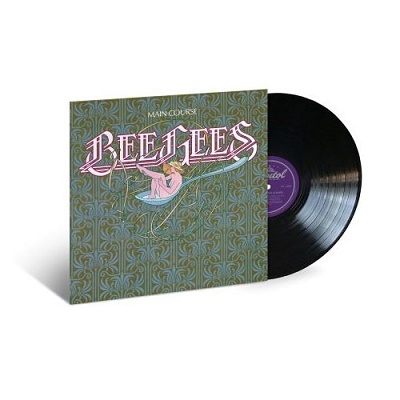
ビージーズの5作品が新たにリマスターされLPで再発決定
1975年6月に発表された、ビー・ジーズにとって新たな黄金時代の幕開けとなったアルバム。
アリフ・マーディンがプロデュースを担当、R&Bからディスコまで様々なスタイルのナンバーを収録。
全米1位、全英5位を記録した「ジャイヴ・トーキン」「ブロードウェイの夜」「ファニー」がシングル・ヒット。
キャピトル・スタジオにてオリジナル・アナログLP・マスターからリマスター
ブラック・ヴァイナル
発売・販売元 提供資料(2020/03/17)
It may sound silly to call the 12th album by a group with an eight-year string of gold records behind them a "breakthrough," but that's what Main Course was. The group's first disco album -- and, for many white listeners, the first disco album they ever purchased -- Main Course marked a huge change in the Bee Gees' sound. The group's earlier LPs, steeped in a dense romantic balladry, were beautifully crafted but too serious for any but hardcore fans. Main Course had a few ballads, such as "Songbird" and "Country Lanes," but the writing was simpler, and the rest of it was made up of catchy dance tunes (heavily influenced by the Philadelphia-based soul music of the period), in which the beat and the texture of the voices and instruments took precedence over the words. The combination proved irresistible, and Main Course -- driven by the singles "Jive Talkin'," "Nights on Broadway," and "Fanny (Be Tender With My Love)" -- attracted millions of new listeners. It also repelled fans of the group's earlier style, which was a bit ironic. The disco numbers on Main Course displayed the same care and craftsmanship that had characterized, say, "First of May" or "Odessa." Barry Gibb's falsetto voice, introduced on this album, was startling at first, and became an object of ridicule in later years, but the slow break on "Nights on Broadway" and songs like "Fanny (Be Tender With My Love)" and "Baby As You Turn Away" were as exquisitely sung as "Lonely Days" or "How Can You Mend a Broken Heart," and they had the same sense of romantic drama, leavened by a layer of sheer fun; one had less of a sense that the singer was dealing with the love of a lifetime, so much as a conquest for the evening, which was in keeping with the sexual mores of the mid-'70s. And the spirit of fun was no accident -- producer Arif Mardin, seeking to rescue the group's stagnating career, had gotten the Bee Gees to turn their talents in a musical direction that they'd always loved but never embraced. Barry, Robin, and Maurice Gibb had been fascinated by R&B and soul for years ("To Love Somebody" had been written for Otis Redding to sing), but, as white Britons -- fearing they'd seem ridiculous -- they had never adapted those sounds themselves. Not only didn't they seem ridiculous, but they took to it as easily as they'd absorbed the Beatles' harmony-based rock sounds in the late '60s. It was a liberating experience for the entire group -- Blue Weaver, newly added to the lineup with an array of electronic keyboards and ideas that ended up shaping lots of the songs here; Alan Kendall, playing in a funky guitar style; and drummer Dennis Byron, playing more complicated patterns than he'd been asked to in years, were also delighted with the new direction, and they constituted the instrumental core of the band for the next six years. Years later, Main Course holds up as well as anything the group ever did, and with killer album cuts like "Wind of Change" (featuring a superb Joe Farrell tenor sax solo) and "Edge of the Universe" all over it, demands as much attention as any hits compilation by the group. ~ Bruce Eder
Rovi
橋渡し役のような「ブロードウェイの夜」や「ベイビー・アズ・ユー・ターン・アウェイ」などは、それぞれにしっかりとした存在感があって、中間色のぼやけた感じは一切ない。要するに、全ての楽曲がビー・ジーズなのだ。
個人的な白眉は「ファニー」だ。新旧のいいところをミックスしたような秀作で、終盤の2階級特進する転調も素晴らしく、アルバムの屋台骨を支える主役級の看板曲だと思っている。
もう1曲、「宇宙の片隅」について触れたい。とてもシンプルな楽曲で、歌詞とは裏腹に、エルトン・ジョンの「ロケット・マン」のような宇宙遊泳している感じはなく、むしろ、酸素のたっぷりある地上から満天の星空を眺めながら遠い宇宙を空想している情景が浮かんでくる。こうした心を温めてくれる楽曲、というのは必要だ。