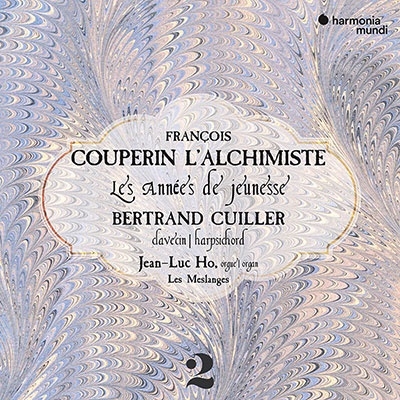
ベルトラン・キュイエによるF.クープラン作品集第2弾
天才の才能の軌跡をたどる
オルガン・ミサを含む若き日の作品集
フランスの名手、ベルトンラ・キュイエによるフランソワ・クープラン:クラヴサン曲集全曲録音プロジェクトの第2弾、若き日の作品集の登場(第1弾はHMM902375)。クープランは17歳でパリのサン=ジェルヴェ教会のオルガニストになり、ここから宮廷礼拝堂のオルガニストと王族の子どもたちのチェンバロ教師へと飛躍することになります。この第2弾では、クラヴサン曲集のほか、オルガン・ミサなど、この若い時期のクープランの作品を収録しています。若きクープランの才気にみなぎった作品群となります。ベルトラン・キュイエの深い洞察に満ちた解釈と、併録されているゲストのオルガン奏者を招いてのオルガン・ミサなどにより、クープランの創造力の源となった音楽の場の豊かな響きがよみがえったようです。
ベルトラン・キュイエは、1978年ナントで音楽一家に生まれました。パリ国立高等音楽院でクリストフ・ルセにチェンバロを師事、その後ピエール・アンタイのもとでも研鑽を積んでいます。ブリュノ・コセ率いるレ・バス・レユニやラ・レヴーズなど様々なアンサンブル、そしてレザール・フロリサン、コンセール・スピリチュエル、ストラディヴァリアなどでも演奏、録音やツアーにも参加しています。通奏低音奏者、アンサンブル、そしてソリストとして活躍するサラブレッドです。アルファ、ナイーブ、MIRAREなどからアンサンブル、ソロのCDを多数リリースしております。2014年にはMIRAREでラモーのチェンバロ作品全曲をリリースしています(MIR266)。
キングインターナショナル
発売・販売元 提供資料(2020/04/23)
Couperin: LAlchimiste is a complete cycle of Francois Couperins voluminous keyboard music, shepherded by, but not exclusively featuring, harpsichordist Bernard Cuiller. Indeed, more than half of this three-CD set, the second in Cuillers series, is given over to a pair of organ masses performed by organist Jean-Luc Ho. The LAlchimiste title is a bit quizzical but appears to refer to the composers ability to combine diverse elements in his music, which is not presented chronologically in the series. Cuiller might argue that the titles given to the individual harpsichord pieces in Couperins ordres are themselves meant to be a bit mysterious. The first two ordres recorded here are much later than the organ masses and are not quite from the composers annees de jeunesse, years of youth. The concepts, then, are a bit murky, but the performances are quite stirring. Cuillers harpsichord, a modern copy of a 17th century French instrument, is a powerful thing, and Harmonia Mundi records it with just the kind of closed-in, hothouse atmosphere from which Couperin benefits. The first two ordres begin with dances and then proceed to programmatic pieces; Cuiller notes the dance rhythms without overemphasizing them, and his readings overall have an attractive breadth. The presence of the organ masses, not often recorded, is a major draw here. Their lengthy titles give detailed instruction as to the registrations, but Ho adds flavors of his own in the ornamentation. There are moments of great beauty, such as the Elevation of the Messe propre pour les convents de religieux et religieuses. Organ pieces alternate with short pieces of plainchant, and the overall effect is deeply solemn. These are indeed fascinating manifestations of Couperins talent during his youthful years, and the entire set makes one eager for the next volumes in the series.
Rovi