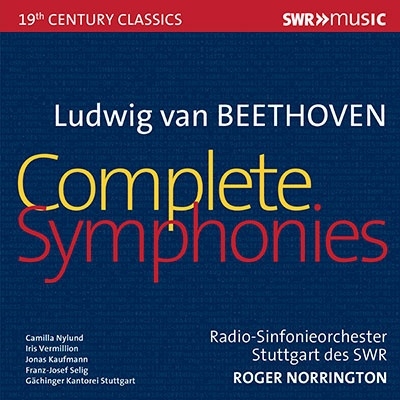
2002年にシュトゥットガルトで行われた、ノリントンとシュトゥットガルト放送響によるベートーヴェン・チクルスを収めた一連のアルバムが、たいへんお求めやすいBOXで登場します。かなり速いテンポを基本とするアプローチですが、細部までおろそかにしない、とにかく丁寧な表現で、デュナーミクや歌いまわしにも独特のアイデアが満載。その美しさと爽快感は世界中の音楽ファンを魅了しました。第九のテノールにカウフマンが参加、マーチではその若々しい歌声を楽しむことが出来ます。 (C)RS
JMD(2020/03/11)
【ノリントンの爽快ベートーヴェンがお値打ちBOXで登場!】
2002年にシュトゥットガルトで行われた、ノリントンとシュトゥットガルト放送響によるベートーヴェン・チクルスを収めた一連のアルバムが、たいへんお求めやすいBOXで登場します。かなり速いテンポを基本とするアプローチですが、細部までおろそかにしない、とにかく丁寧な表現で、デュナーミクや歌いまわしにも独特のアイデアが満載。その美しさと爽快感は世界中の音楽ファンを魅了しました。第九のテノールにカウフマンが参加、マーチではその若々しい歌声を楽しむことが出来ます。
ナクソス・ジャパン
発売・販売元 提供資料(2020/03/10)
Conductor Roger Norringtons performances of Beethoven were controversial in the 1980s when he first offered them; they were controversial in 2002, when he conducted these performances with the late, lamented Stuttgart Radio Symphony Orchestra; and they remain controversial in this 2020 release, even if perhaps as time goes by they become more permanent fixtures of the landscape. Norrington here transferred his historical performance techniques to a modern-instrument orchestra. His trademarks are present: fast tempos that follow the metronome markings from late in Beethovens life, ignored by most musicians, avoidance of vibrato, and punchy accents that bring out the wind and especially the brass parts. Whatever one thinks of Norringtons readings, its not possible to claim that he is imposing a system on the music: his readings are detailed and careful. The attraction of this set is that he has a modern orchestra that can follow him through the changes he applies to the Beethoven symphonies. Consider the first movement of the Symphony No. 6 in F major, Op. 68 (Pastoral), wonderfully delicate despite the high speed. Its worth noting that Norrington is extrapolating backward regarding the tempo for most of these works; Beethoven didnt get a metronome (and it may have been a defective one) until the mid-1810s. The Andante cantabile of the Symphony No. 1 in C major, Op. 21, is a brisk walk indeed, but it does remain cantabile. The problem with Norringtons approach is that when Beethoven does mark a movement Presto, in the Symphony No. 7 in A major, Op. 92, he has nowhere to go: his Presto is hardly faster than his other Allegro movements, and in the finale of the Symphony No. 9 in D minor, Op. 125, he doesnt brutalize the singers with the logical conclusion of his proportions; that movement is brisk but not overly rapid. Again, all these movements, and all the rest of them, are well crafted, and ultimately listeners must decide for themselves about Norringtons approach, which has certainly proven itself durable. The original sound quality and the mastering from the new SWR Music label are unusually good.
Rovi