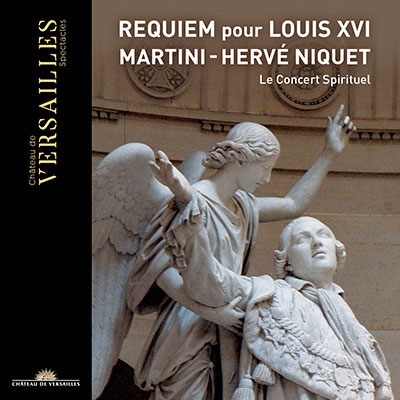
マルティーニという名の作曲家は18世紀に何人かいますが、ここに登場するのは不滅のヴォーカル・ナンバー「愛の喜びPlaisir d'amour」を書いたことで知られるフランス随一の人気オペラ作曲家。マルティーニというのは筆名で本人はバイエルン生まれのドイツ人ですが、1765年にパリに出て以来飛ぶ鳥を落とす勢いで人気を得、王室にも愛されながら革命期にも迫害を避けつつ第一線で活躍、あまりの人気にメユールやカテルら同時代人たちに妬まれ歌劇界を追われたものの、教会音楽で根強い支持を得ました。『レクィエム』はナポレオン治世下で書かれながら、王政復古後ルイ16世の遺骸再埋葬時に演奏され注目を集めた傑作。バス独唱の活躍もさることながら、充実した金管の響きなどピリオド楽器でこそ真価のわかる音楽内容には、まさにニケという解釈者が絶好というほかありません。 (C)RS
JMD(2020/03/10)
【「愛の喜び」の作者として人気絶頂をきわめた名匠、晩期の充実作!鬼才ニケの圧倒的解釈で】
ヴェルサイユ宮殿が推進するフランス音楽復興プロジェクトは、現代において滅多に名前が知られていない作曲家の復権にも大きな貢献を果たしつづけています。予算をかけて録音に踏み切るということは、知らしめる意義がそこにあると関係者一同が認識してのこと。秘曲発掘に実績ありのエルヴェ・ニケが新たに録音した今回のアルバムもまさにそうした実績に連なる1枚と言ってよいでしょう。この指揮者が手がけてきた知名度の低い作曲家たちのアルバムをひとつでもご存知の方なら、その意味は十二分にご理解いただけるに違いありません。
マルティーニという名の作曲家は18世紀に何人かいますが、ここに登場するのは不滅のヴォーカル・ナンバー「愛の喜びPlaisir d'amour」を書いたことで知られるフランス随一の人気オペラ作曲家。マルティーニというのは筆名で本人はバイエルン生まれのドイツ人ですが、1765年にパリに出て以来飛ぶ鳥を落とす勢いで人気を得、王室にも愛されながら革命期にも迫害を避けつつ第一線で活躍、あまりの人気にメユールやカテルら同時代人たちに妬まれ歌劇界を追われたものの、教会音楽で根強い支持を得ました。『レクィエム』はナポレオン治世下で書かれながら、王政復古後ルイ16世の遺骸再埋葬時に演奏され注目を集めた傑作。バス独唱の活躍もさることながら、充実した金管の響きなどピリオド楽器でこそ真価のわかる音楽内容には、まさにニケという解釈者が絶好というほかありません。
ナクソス・ジャパン
発売・販売元 提供資料(2020/03/09)
The composer involved in this release, Jean-Paul Egide Martini (1741-1816), will be unknown to most listeners, and his rediscovery by Herve Niquet and Le Concert Spirituel represents a major event. German born, Martini flourished in France and managed to ride out the entire revolutionary period as a productive composer, with the exception of the Reign of Terror (he got the hell out of Dodge). True to form, when the monarchy was restored in 1814, Martini, by then in old age, published this Requiem for Louis XVI, which he had published a few years before. What made all of this possible was that Martini seems to have kept up with the times, mastering the weighty revolutionary styles of Luigi Cherubini and others, and feeding them back into this serious proto-Romantic mass. Listen to the highly operatic Elevatione or the big Dies irae that could easily have been written 50 years later. Niquet avoids early music sparsity, with a strong choir of about 40, bulked up with an hautes-contre trio, and a substantial orchestra about ten souls bigger that includes four bassoons, serpent, and a tam-tam. The three soloists give muscular, full-throated performances, and in general, the mass has an imposing tone that must have made a fabulous impression in 1814. It will likely do similarly for any choir that adopts the work today. Impressive sound from the Chapelle Royale at Versailles is another major attraction here. The album closes with Hector Berliozs arrangement of La Marseillaise. Whether Berlioz knew the Requiem is unknown, but it would be no surprise at all if he did.
Rovi