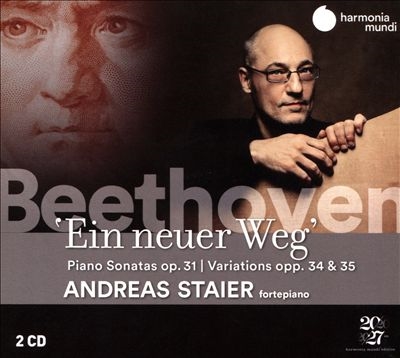
シュタイアーによるベートーヴェン!
ベートーヴェン・イヤーにハルモニアムンディがリリースするベートーヴェン作品集。次なる新譜は、フォルテピアノのシュタイアーの登場です。「新しい道」と題し、中期の傑作3つのソナタと、変奏曲というプログラム。
Op.31の3つのソナタは1803年4月に出版されました。この時期、ベートーヴェンは友人に「自分はこれまでの仕事に満足していない。今から新しい道を歩む」と宣言していました。1802年の秋には「ハイリゲンシュタットの遺書」を書いたベートーヴェン。自身の耳の病から逃れられないことを確信しつつ、新たな人生を歩み出す決意を固めた時期でもあります。これら3つのソナタも、古典的なソナタ形式に、様々な異質な要素(第1楽章の冒頭が主和音から始まらない、冒頭でいきなりリタルダンドがある、など)が盛り込まれており、聴き手は次の展開にワクワクせずにはおられない楽曲がそろっています。[CD2]の変奏曲は、出版社にあてた1802年10月18日付けの手紙で「私は今2つの変奏曲作品をもっています。両曲とも実に全く新しい流儀で作曲したものです」と売り込んだ、まさにその2つの変奏曲。天才ベートーヴェンがさらなる高みに上がり、いよいよその創造性を発揮してきた時期の作品を、シュタイアーが最良の形で演奏しています。
ピアノ・ソナタ第16番は独特のリズムで始まり、シンコペーションのリズムも多用されている作品で、機知に富んだ曲。シュタイアーは、ベートーヴェンがちりばめた各要素をくっきりと打ち出しており、こんなにも面白さに満ちた曲だったかと眼から鱗の連続となっております。第17番「テンペスト」第1楽章冒頭のアルペジオのにじんだ効果はフォルテピアノならでは。第18番第1楽章でも、ペダルを使用した時の響きがにじむような効果はフォルテピアノならではの魅力といえるでしょう。冒頭のリタルダンドも意外性と説得力十分。終楽章のロンドは快刀乱麻の切れ味、痛快極まりない演奏となっています。まるでこれらのソナタが昨日書かれたかのような、新鮮さに満ちた演奏です。
ベートーヴェンは変奏曲の達人でありました。ひとつの主題の様々な属性を最大限に引き出しており、ベートーヴェンの楽想の豊かさと計りしれない構成力は他の追随をゆるさないものがあります。ヘ長調の変奏曲は、シンプルな歌が魅力な作品ですが、シュタイアーの歌心あふれる演奏に、あらためてこの作品の美しさに感じ入るばかりです。「エロイカ変奏曲」も超絶技巧作品ですが、シュタイアーの演奏は、これが難曲であることよりも、あくまでもベートーヴェンが変奏の達人であったことを前面に打ち出しており、ファンタジーに満ちたスケールの大きな「エロイカ変奏曲」を聴かせてくれます。
キングインターナショナル
発売・販売元 提供資料(2020/02/06)
The neuer Weg (new way) referred to in the title of this release by pianist Andreas Staier is not the performance of Beethovens piano music on a historical instrument, something various pianists have done. Nor is it even the 1810 piano by Viennese maker Matthias Muller, an unusual, clean instrument that compares favorably to the usual Walter models. Instead, the neuer Weg was something promised by Beethoven himself, in the famed Heiligenstadt Testament, the unmailed letter in which he laid out his ambitions and his fears about his encroaching deafness. Staier here gathers five piano works: three sonatas and two vastly contrasting variation sets, written close in time to the Testament. The neuer Weg did not materialize immediately, but what Staier gets here is that Beethovens ambitions did. The Piano Sonata No. 18 in E-flat major, Op. 31, No. 3, has been called a sonata about the sonata, music about music, and indeed, in all five of these works, convention is pushed to its extremes. Staier lingers over the first notes of each variation of the Six Variations on an Original Theme, Op. 34, as Beethoven, in unprecedented fashion, moves to a new key for each one. In the Fifteen Variations and a Fugue on an Original Theme in E flat major, Op. 35, known as the Eroica Variations because they use the same tune as the finale of the Symphony No. 3 in E flat major, Op. 55, he gives muscular power to the likewise unique mini set of variations that introduces the work. The slow movements of the three Op. 31 sonatas, which can seem merely frilly, have a fantastic quality here, with Staier using the nimbleness of the fortepiano to glide over the arpeggiated decorations in the Adagio grazioso (an unusual tempo marking in itself) of the Piano Sonata No. 31 in G major, Op. 31, No. 1. Staier is sensitive at every turn, and he brings out the sonatas creatively restless quality without turning to the heavily percussive quality of which the fortepiano is capable. Fine Teldex Studio sound captures the subtlety and clarity of Staiers approach in this excellent Beethoven period-instrument recording that may be too restrained for some but will reward many repeated hearings.
Rovi