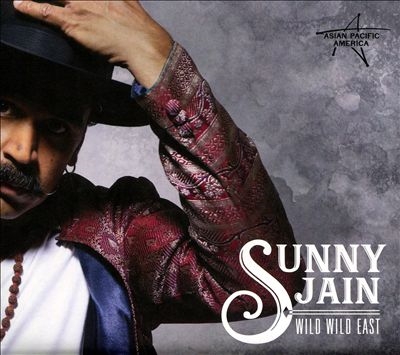
An explosive jazz drummer and master of the Indian double-sided drum the dhol, Sunny Jain is known for mixing post-bop jazz, psych-rock, and funk with the vibrant Indian musical traditions he grew up with as the child of Punjabi immigrants. He brings all of these influences to bear on his fourth solo album, 2020s potently realized Wild Wild East. Drawing inspiration from Bollywood and Spaghetti Western soundtracks, surf rock, hip-hop, and avant-garde improvisation, Jain paints a vivid, cross-cultural musical portrait. Its a sound that has specific roots in 70s Bollywood curry westerns like Sholay and Khote-Sikkay, where directors brought American cowboy archetypes and themes to stories set in India. Jain purposefully recontextualizes these ideas on Wild Wild East, breaking open the image of the swaggering American cowboy with his acidic, twangy, propulsively hypnotic songs. Its an inspired cinematic concept that conjures kaleidoscopic images from filmmakers like Alejandro Jodorowsky, Quentin Tarantino, and Robert Rodriguez; filmmakers who similarly throw music, pop culture, and their own distinctive cultural backgrounds into a blender to create something new. Helping him bring his vision to life are several collaborators including saxophonist Pawan Benjamin, guitarist Grey McMurray, and sousaphonist Kenny Bentley. Together they craft a kinetic, wild-eyed sound. The opening Immigrant Warrior is a spiraling leviathan jig that combines the outre, spiritual aggression of late-60s John Coltrane with a searing sitar-meets-mariachi guitar lead over a buoyant, ska-like South Asian groove. Similarly, the driving Brooklyn Dhamal sounds like the backdrop for a hard-boiled Bollywood film noir. Its guitar melody brings to mind Dick Dales classic 1962 surf anthem Miserlou (itself a reworking of an Eastern Mediterranean folk song), underlining the cross-border origins of the American surf rock sound. Elsewhere, Jain conjures more languid soundscapes, dipping into psychedelic folk on Blackwell and reworking the 1958 Hindi film song Hai Apna Dil to Aawara into a cowboy ballad sung with sweet melancholy yearning by vocalist Ganavya Doraiswamy. He also offers a dusky rendition of the religious Jainist bhajan Tumse Lagi Lagan, which finds Benjamin pulling ever more ghostly tonalities from the Banjuri, a Hindustani bamboo flute. There are also stronger, more defiant themes that run through Wild Wild East, as on the bass-heavy hip-hop anthem Red, Brown, Black. Showcasing Muslim rapper Haseeb, the song is a hard-hitting rumination on colonization and the trauma shared by marginalized peoples. Haseeb proclaims, Brown skin, red skin, even Asian, same to a cowboy who really hate us. On the frontier thinking they some f***ing saviors. We came here to work, they the true invaders. With Wild Wild East, Jain has crafted a masterful, robust celebration of Americas immigrant cowboy soul. ~ Matt Collar
Rovi