Like each of the previous chapters in artist Matana Roberts projected 12-part work Coin Coin, she uses her music as a medium. Through it she explores the gauzy intersection of folklore and history that serves as a definition of the way in which we view ourselves at the present juncture, or refuse to should we wish to remain in the darkness. Roberts interrogates official accounts, slave narratives, her familys stories, and her identity as an African American woman; she also delves into and explodes mythologies, historic, spiritual, and cultural. Coin Coin is not one story but many, a revelatory exploration of Blackness outside the notorious twin filters of race and class that define America.
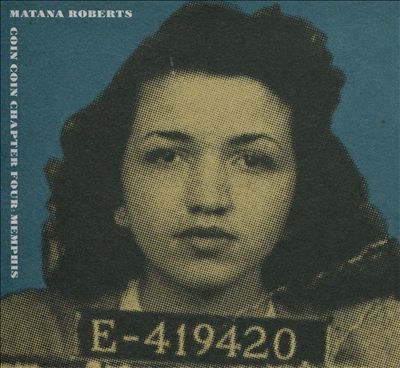
Where Coin Coin Chapter Three: River Run Thee was delivered completely solo, Memphis showcases a brand-new band. This new group includes the criminally under-celebrated multi-instrumentalist and composer Hannah Marcus on guitars, fiddle, and accordion, Sam Shalabi on guitar and oud, Nick Caloia on bass, and Ryan Sawyer on drums and percussion. All members provide vocals. Roberts speaks, sings, and plays alto saxophone and clarinet. She also engages contributions from trombonist Steve Swell and vibraphonist Ryan White alongside a trio of guest vocalists. Roberts employs her usual rainbow of methods to reveal her interrogation of past and present: Spoken word, singing, narrating, playing, and directing. Musically free jazz improvisation winds through gospel, blues, folk, and field chants. Introduced by droning voices, bowed strings, clarinet, and percussion, Jewels of the Sky: Inscription opens the doorways between antiquity and a 21st century United States where black men and women are executed by police. Though her maternal grandmothers mugshot adorns the cover, Roberts traces the story of an ancestor named Liddie whose father was murdered by the KKK. In As Far as the Eye Can See, jaw harp, accordion, fiddle, and guitars frame her spoken narrative about the slippage of memory, Liddies recollection of her father encouraging her to run as a metaphor to flee the Klans violence and hate, of church, and segregation. In the sets longest track, Roberts sets snippets of folk songs Cold Frosty Morning and Paddy on the Turnpike against free improvisation as a way of opening them to her thematic narration which concludes with the sung refrain from Do Lord. In Fit to Be Tied, W.C. Handys St. Louis Blues is offered atop a Latin beat amid chants, moans, and free playing. Her Mighty Waters Run features staggered choral voices droning through the spiritual Roll the Old Chariot. On All Things Beautiful, abstract group improvisation clears the way for Roberts to expressionistically narrate the Klans violence before and after Liddies flight: I wish I could feel myself again/I am a child of the wind/Even daddy said so…. Like its predecessors, Coin Coin Chapter Four: Memphis isnt easy to listen to, nor should it be, given the nature of what it explores and explicates. That said, it is a necessary, engaged art that bears repeated listening for its revelation to unfold and hopefully open a gateway to understanding. Arguably, it is the strongest and most compelling of the Coin Coin releases thus far. ~ Thom Jurek
Rovi