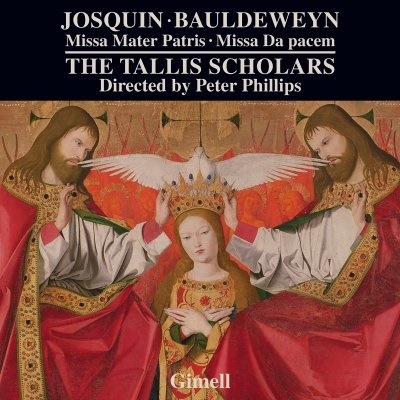
タリス・スコラーズのジョスカン・デ・プレ!
第8巻はミサ曲「父の母にして娘」(マテル・パトリス)
1973年の結成から現在まで、ルネサンス宗教音楽演奏の世界最高峰としての地位を確立し続けてきた"究極のポリフォニー"タリス・スコラーズ。2021年のジョスカン・デ・プレ没後500周年アニヴァーサリー・イヤーに全9巻での完結を目指す、「ジョスカンのミサ曲全曲録音」という偉大なプロジェクト。第8巻では、ブリュメルのモテットに基づくミサ曲「父の母にして娘」(ミサ・マテル・パトリス)、そしてその精緻な書法からジョスカンの作と考えられていたノエル・ボールドワン(バウルデヴェイン)のミサ曲「主よ、平和を与えたまえ」(ミサ・ダ・パーチェム)を収録。タリス・スコラーズの並外れたパフォーマンスによって、レコード・アカデミー賞を始め、英グラモフォン賞や仏ディアパゾン・ドールの「年間最優秀賞」を獲得し、世界で絶賛されてきた至高のジョスカン・デ・プレにご期待ください。
東京エムプラス
発売・販売元 提供資料(2019/08/01)
The graphics for this Tallis Scholars release mention scholarly disagreement over the Missa Mater Patris, long attributed to Josquin but recently shown to be by the little-known Noel Bauldeweyn, writes director Peter Phillips. Or is it? he adds. He sketches out the controversy, pointing out that the mass does not resemble any of Josquins other compositions in the genre; he doesnt answer his question. However, you might take the album as a rejoinder to those questioning the authenticity of the mass. Its possible removal from the Josquin canon rests entirely on this musical evidence, so Phillips is entitled to adduce musical evidence of his own: the genuine Bauldeweyn mass included here sounds nothing like Josquin but is basically a work in 15th century style with a bit of imitative counterpoint thrown in. The Missa Mater Patris is a spectacular work, whoever wrote it. It does include long homophonic passages that were uncharacteristic of Josquins time and the rest of his output (although apparently not very characteristic of Bauldeweyn, either). Thus, Josquin inflects his borrowed material, a motet by Brumel, in the directions of both simplicity and, at the end, the usual complexity. Without taking an explicit position, Phillips admits that some parts of the Bauldeweyn Missa da Pacem are pretty dull, and he speculates that the parts that arent might have been written by Josquin. The Missa Mater Patris is at its most Josquin-typical in the Incarnatus and Crucifixus, which introduce a new tonal realm in a way that probably no other Renaissance composer was capable of. Whatever your ideas when it comes to the do-it-yourself musicology, the reading by the always strong Tallis Scholars is especially sensitive here, and Gimells sound from the Chapel at Merton College is superb. Highly recommended, both simply for its pleasures and as a way to introduce the kinds of issues scholars of Renaissance music think about.
Rovi