カントリー・レジェンド、バック・オーウェンズ。伝統的なカントリー・ミュージックにエレキ・ギターとロックンロールを取り入れたベーガーズ・フィールド・サウンドを作り出し、カントリー・ミュージックに新たなムーヴメントを起こした彼は、1960年代から21曲もの全米No.1カントリー・シングルを含む、数多くの大ヒットをチャートへと送り込み、ミュージック・シーンに大きな影響を与えた。さらに1969年からは、バラエティTV番組『HEE-HAW』の司会をロイ・クラークとともに務め(ちなみに、全米のお茶の間にも進出を果たした。また彼の1963年の全米No.1ヒット「Act Naturally」は後に、ビートルズにもカヴァーされ、話題を集めることになった。
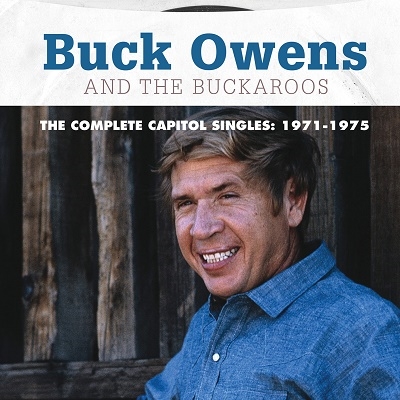
そのバック・オーウェンズ栄光の軌跡を辿る、キャピトル時代のシングル・コレクションの第2弾が登場!今回リリースされる『THE COMPLETE CAPITOL SINGLES: 1971–1975)』は、2016年の『THE COMPLETE CAPITOL SINGLES: 1957-1966』、2018年の『THE COMPLETE CAPITOL SINGLES: 1967–1970)』に続く第3弾にして完結盤。バックが1971年から1975年の4年間にリリースした21枚のシングルのA面とB面を年代順に完全網羅したCD2枚組となる。しかも全曲、オリジナルのステレオ・シングル・ミックスを使用している。
70年代前半のバックは、時代の変化やメインストリームの音楽性が、その楽曲に反映されていた時期でもあった。この時期の彼は、ポップス寄りのカントリーから、ブルーグラス、ノヴェルティ・ソング、豪華なプロダクションやシンプルなセット・アップのバラードまで、幅広いスタイルを披露していた。しかしどんなスタイルを取り入れようとも、その核にあるのは勿論、バックのホンキー・トンク・サウンドである。新たな領域へと果敢に踏み出していった彼は、この時代、70年代初となる全米No.1カントリー・シングル「Made In Japan」をはじめ、「Roll in My Sweet Baby's Arms」、「Big Game Hunter」、「(It's A) Monster Holiday」、「On The Cover of Music City News」など9曲の全米TOP10カントリー・ヒットを世に送り出している。その全てが本作に収録されている。
この他、全米カントリー・チャート9位に輝いたサイモン&ガーファンクル「Bridge Over Troubled Water (明日に架ける橋)」のカヴァーや、スーザン・レイとのデュエット「The Good Old Days (Are Here) Again」、「Santa's Gonna Come In A Stage Coach」、「Looking Back To See」や、息子バディ・アランとの「Too Old The Cut The Mustard」なども本作には収録されている。
全曲最新リマスター音源で収録された『THE COMPLETE CAPITOL SINGLES: 1971–1975)』。ブックレットにはこれまで同様、スコット・B・ボナーによる解説を収録。バック・オーウェンズが自らの代名詞となったベーカーズ・フィールド・サウンドを確立し、カントリー・ミュージックに新たなムーヴメントを起こした"黄金時代"とも呼べる彼のヒストリーがここに収められている。
発売・販売元 提供資料(2019/04/26)
Omnivore's third and final installment of The Complete Capitol Singles of Buck Owens covers the years between 1971 and 1975 -- a time when Buck's overall stardom was at a peak thanks to Hee Haw but his grip on the country charts was beginning to loosen. These two developments were inextricably intertwined, a by-product of evolving from a Bakersfield renegade to a linchpin in the country showbiz establishment. As this was happening, the lineup of the Buckaroos began to shift, and by 1971, only Buck and his faithful lieutenant Don Rich were left from the iconic group that defined the sound and style of country music in the 1960s. Rich would soon die in a tragic motorcycle accident in 1974, but The Complete Capitol Singles: 1971-1975 makes it plain that Buck Owens had already started to drift creatively before his partner's death. Make no mistake, the double-disc set contains a lot of terrific music: he recasts "Bridge Over Troubled Water" so it's as quietly trippy as a Glen Campbell tune, the Buckaroos bluegrass album Ruby kicked up crackerjack A- and B-sides, Susan Raye proved to be an adept duet partner, "Made in Japan" (his last number one single, not counting Dwight Yoakam's 1988 cover of "Streets of Bakersfield") is a wry bit of Pan-Pacific country-pop, and country Halloween tunes don't come better than "(It's A) Monster Holiday." As good as it is, the latter does hint at how his era of Buck's is filled with novelties and cutesy slices of nostalgia. The worst of these are his vaudevillian duets with his son Buddy -- "Too Old to Cut the Mustard" and "Wham Bam" seemed designed for an off episode of Hee Haw -- but even some strong songs are plays on pop culture catchphrases ("You Ain't Gonna Have Ol' Buck to Kick Around No More," "Ain't It Amazing, Gracie"), underscoring how Buck spent the early '70s coasting on a wave created by other musicians. There's plenty of pleasure to be had in this -- Owens was still a sharp record-maker, after all -- but the seams are apparent throughout these two discs, evident in how Buck embraced the soft haze of AM radio and didn't always spend much time bothering with a memorable flip side. Even with these flaws, this Omnivore set is necessary for understanding this final act of Buck Owens' imperial years: by offering the duets and duds alongside the ace A-sides, it paints a full picture of Buck in twilight. ~ Stephen Thomas Erlewine|
Rovi
Omnivore's third and final installment of The Complete Capitol Singles of Buck Owens covers the years between 1971 and 1975 -- a time when Buck's overall stardom was at a peak thanks to Hee Haw but his grip on the country charts was beginning to loosen. These two developments were inextricably intertwined, a by-product of evolving from a Bakersfield renegade to a linchpin in the country showbiz establishment. As this was happening, the lineup of the Buckaroos began to shift, and by 1971, only Buck and his faithful lieutenant Don Rich were left from the iconic group that defined the sound and style of country music in the 1960s. Rich would soon die in a tragic motorcycle accident in 1974, but The Complete Capitol Singles: 1971-1975 makes it plain that Buck Owens had already started to drift creatively before his partner's death. Make no mistake, the double-disc set contains a lot of terrific music: he recasts "Bridge Over Troubled Water" so it's as quietly trippy as a Glen Campbell tune, the Buckaroos bluegrass album Ruby kicked up crackerjack A- and B-sides, Susan Raye proved to be an adept duet partner, "Made in Japan" (his last number one single, not counting Dwight Yoakam's 1988 cover of "Streets of Bakersfield") is a wry bit of Pan-Pacific country-pop, and country Halloween tunes don't come better than "(It's A) Monster Holiday." As good as it is, the latter does hint at how his era of Buck's is filled with novelties and cutesy slices of nostalgia. The worst of these are his vaudevillian duets with his son Buddy -- "Too Old to Cut the Mustard" and "Wham Bam" seemed designed for an off episode of Hee Haw -- but even some strong songs are plays on pop culture catchphrases ("You Ain't Gonna Have Ol' Buck to Kick Around No More," "Ain't It Amazing, Gracie"), underscoring how Buck spent the early '70s coasting on a wave created by other musicians. There's plenty of pleasure to be had in this -- Owens was still a sharp record-maker, after all -- but the seams are apparent throughout these two discs, evident in how Buck embraced the soft haze of AM radio and didn't always spend much time bothering with a memorable flip side. Even with these flaws, this Omnivore set is necessary for understanding this final act of Buck Owens' imperial years: by offering the duets and duds alongside the ace A-sides, it paints a full picture of Buck in twilight. ~ Stephen Thomas Erlewine
Rovi